
Featured image for a nursing assistant should give nail care
Image source: png.pngtree.com
Nail care is a critical yet often overlooked aspect of patient hygiene that nursing assistants must prioritize to prevent infections and promote overall wellness. Proper techniques—like keeping nails clean, dry, and trimmed straight across—help reduce the risk of bacterial growth and skin tears, especially in vulnerable populations. Always follow facility protocols and use sterile tools to ensure safe, effective care with dignity and respect.
Key Takeaways
- Inspect nails daily: Check for discoloration, swelling, or breaks to catch issues early.
- Keep nails trimmed: Cut straight across and file edges to prevent ingrown nails.
- Moisturize cuticles: Apply lotion to prevent dryness, cracking, and infections.
- Use clean tools: Sterilize clippers and files to avoid cross-contamination risks.
- Report abnormalities: Alert healthcare providers to signs of infection or systemic conditions.
- Encourage gentle handling: Avoid aggressive pushing or cutting to protect delicate skin.
📑 Table of Contents
- The Importance of Nail Care in Nursing: A Vital Component of Patient Well-Being
- Why Nail Care Matters: Health Risks and Benefits
- Essential Tools and Supplies for Safe Nail Care
- Step-by-Step Guide to Performing Nail Care
- Special Populations: Tailoring Nail Care to Patient Needs
- Documentation, Communication, and Legal Considerations
- Data Table: Nail Care Frequency and Risk Factors by Patient Group
- Conclusion: Nail Care as a Cornerstone of Compassionate Nursing
The Importance of Nail Care in Nursing: A Vital Component of Patient Well-Being
Nail care is more than just a cosmetic concern—it is a critical aspect of patient hygiene and overall health that often goes overlooked in the fast-paced world of healthcare. For nursing assistants, who serve as the backbone of daily patient care, attending to nail health can prevent infections, promote comfort, and even reveal early signs of systemic conditions. Whether caring for elderly patients, those with chronic illnesses, or individuals with mobility limitations, proper nail care is a simple yet powerful way to demonstrate compassion and professionalism. A nursing assistant should give nail care not only to maintain cleanliness but also to uphold dignity and prevent complications that could arise from neglected nails.
Despite its simplicity, nail care requires knowledge, precision, and adherence to best practices. From preventing ingrown nails to detecting signs of fungal infections or poor circulation, a nursing assistant’s attention to nail hygiene can make a significant difference in patient outcomes. In fact, studies show that proper hand and foot hygiene—including nail care—reduces the risk of healthcare-associated infections (HAIs) by up to 30% (CDC, 2022). As frontline caregivers, nursing assistants are uniquely positioned to integrate nail care into routine hygiene protocols, ensuring that every patient receives holistic, patient-centered care. This guide explores essential tips, techniques, and best practices that empower nursing assistants to deliver safe, effective, and compassionate nail care.
Why Nail Care Matters: Health Risks and Benefits
When a nursing assistant should give nail care, they are not merely trimming or cleaning nails—they are engaging in a preventive healthcare practice with far-reaching benefits. Poor nail hygiene can lead to a host of complications, especially in vulnerable populations such as the elderly, diabetics, and those with compromised immune systems. Understanding the risks and rewards of proper nail care is the first step toward implementing it effectively.
Visual guide about a nursing assistant should give nail care
Image source: i.ytimg.com
Preventing Infections and Skin Breakdown
Dirty, overgrown, or improperly trimmed nails can harbor bacteria, fungi, and viruses. In healthcare settings, this increases the risk of cross-contamination and HAIs. For example, a patient with long, jagged fingernails may inadvertently scratch themselves or others, creating entry points for pathogens. Similarly, toenails that are too long can press into the skin, causing painful ingrown nails or ulcers—particularly dangerous for diabetic patients who may not feel the pain due to neuropathy.
- Example: A nursing assistant notices a diabetic resident’s toenails are curling into the skin. By trimming them straight across and filing the edges, the assistant prevents a potential ulcer that could lead to amputation if left untreated.
- Tip: Always use sterile instruments and wear gloves to reduce infection risk during nail care.
Detecting Early Signs of Systemic Conditions
Nails can serve as diagnostic clues to underlying health issues. A nursing assistant should give nail care with a keen eye for abnormalities such as:
- Clubbing (enlarged fingertips with curved nails): May indicate lung or heart disease.
- Spoon-shaped nails (koilonychia): Often linked to iron deficiency anemia.
- White spots or lines: Could suggest nutritional deficiencies or trauma.
- Yellow or thickened nails: Common in fungal infections or psoriasis.
By observing and documenting these changes, nursing assistants can alert nurses or physicians to potential problems, enabling early intervention. For instance, a patient with sudden nail discoloration and swelling might be developing a fungal infection that requires antifungal treatment.
Improving Patient Comfort and Mobility
Long or sharp nails can cause discomfort during daily activities. Elderly patients may avoid walking or wearing shoes if their toenails are painful. Similarly, patients with limited dexterity may struggle to grip items if their fingernails are too long or uneven. Regular nail care enhances mobility, independence, and overall quality of life.
Case Study: At a long-term care facility, nursing assistants began a weekly nail care routine for residents with arthritis. Within three months, staff reported a 40% decrease in complaints about hand pain and a noticeable improvement in residents’ ability to feed themselves and write.
Essential Tools and Supplies for Safe Nail Care
To deliver effective nail care, a nursing assistant should give nail care using the right tools and supplies. The choice of equipment depends on the patient’s condition, nail type, and care setting (e.g., hospital, long-term care, home health). Using inappropriate or unsterilized tools can cause injury or infection.
Must-Have Nail Care Equipment
- Disposable or sterilizable nail clippers: Choose ergonomic designs for patients with arthritis. For thick or brittle nails, use heavy-duty clippers or nail nippers.
- Nail files and emery boards: Use fine-grit files to smooth edges and prevent snagging.
- Cuticle pusher: Gently pushes back cuticles without cutting them, reducing infection risk.
- Magnifying lamp: Helps identify small cuts, ingrown nails, or discoloration, especially in low-light environments.
- Antiseptic wipes and hand sanitizer: For cleaning tools and hands before and after care.
- Moisturizer or cuticle oil: Prevents dryness and cracking, especially in elderly patients with fragile skin.
Special Considerations for High-Risk Patients
Some patients require specialized tools or techniques:
- Diabetic patients: Use single-use, disposable clippers to avoid cross-contamination. Avoid electric trimmers, which can cause micro-injuries.
- Patients with poor circulation or neuropathy: Use extra-gentle techniques and avoid aggressive cuticle pushing. Monitor for signs of trauma.
- Patients with fungal infections: Use dedicated tools to prevent spreading. Disinfect tools with 70% isopropyl alcohol after each use.
Proper Tool Sterilization and Storage
To prevent infections, tools must be cleaned and stored properly:
- Wash tools with soap and water after each use.
- Disinfect with 70% isopropyl alcohol or an autoclave (if available).
- Store in a dry, sealed container to prevent contamination.
- Replace tools every 6–12 months or if they become dull or rusted.
Tip: Label personal care kits for individual patients in shared living environments to avoid cross-use.
Step-by-Step Guide to Performing Nail Care
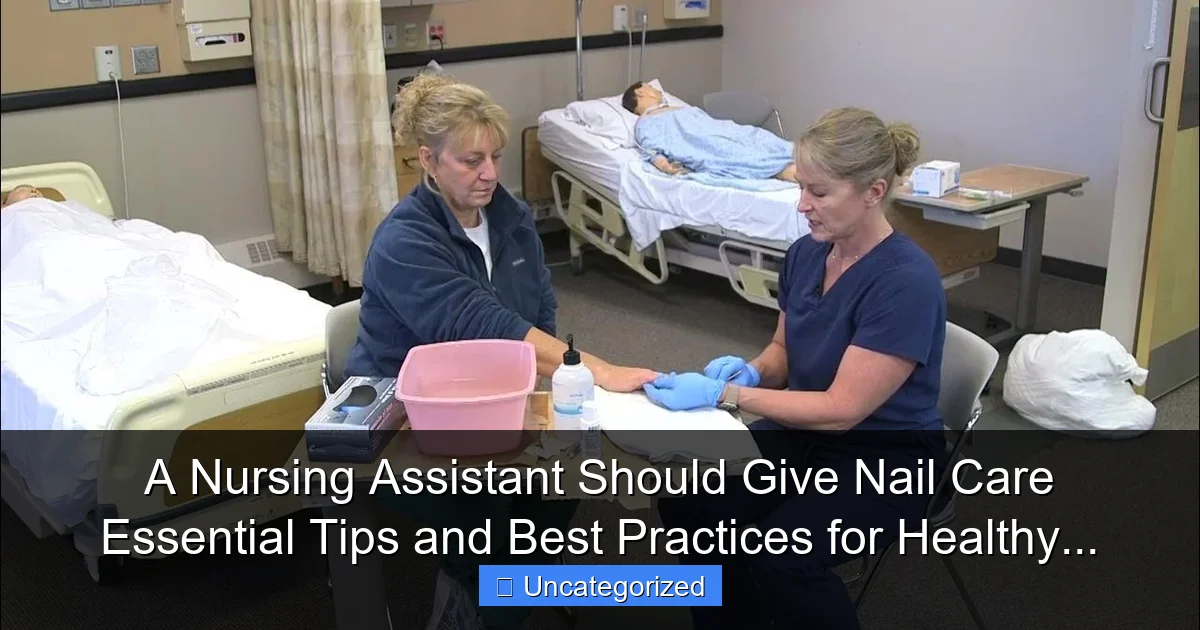
A nursing assistant should give nail care following a systematic approach to ensure safety, comfort, and effectiveness. The process varies slightly for fingernails and toenails but follows core principles of hygiene, assessment, and patient-centered care.
Pre-Care Preparation
- Review patient history: Check for diabetes, poor circulation, fungal infections, or recent surgeries.
- Obtain consent: Explain the procedure and get verbal or written permission, especially in home health settings.
- Prepare the environment: Choose a well-lit, clean area. Use a towel to catch clippings and protect surfaces.
- Sanitize hands and tools: Wash hands thoroughly and disinfect all instruments.
Fingernail Care Procedure
- Soak nails (optional): For dry or thick nails, soak in warm water for 5–10 minutes to soften them.
- Trim nails straight across: Use clippers to cut straight across, slightly beyond the fingertip. Avoid rounding corners to prevent ingrown nails.
- File edges: Use a fine-grit file to smooth any rough spots. File in one direction to prevent splitting.
- Push back cuticles gently: Use a cuticle pusher to push back loose skin. Do not cut cuticles unless medically necessary (e.g., severe overgrowth).
- Moisturize: Apply hand cream or cuticle oil to prevent dryness.
- Inspect and document: Look for abnormalities and note them in the patient’s care plan.
Example: A nursing assistant cares for an elderly patient with arthritis. She uses a magnifying lamp to trim the patient’s fingernails straight across, files the edges, and applies vitamin E oil to the cuticles. The patient reports improved comfort when writing.
Toenail Care Procedure
- Soak feet (if needed): For thick or hard toenails, soak in warm water with Epsom salts for 10–15 minutes.
- Trim toenails straight across: Use toenail clippers to cut straight across. Do not cut too short to avoid ingrown nails.
- File edges: Smooth any sharp or jagged edges.
- Inspect between toes: Check for fungal infections, blisters, or skin breakdown.
- Moisturize (avoid between toes): Apply lotion to dry areas, but keep between toes dry to prevent fungal growth.
- Wear clean socks: Ensure patient wears breathable, non-restrictive footwear.
Tip: For diabetic patients, avoid soaking feet—dry trimming is safer to prevent skin maceration.
Special Populations: Tailoring Nail Care to Patient Needs
A nursing assistant should give nail care that is customized to the unique needs of different patient groups. One-size-fits-all approaches can lead to harm, especially in high-risk populations.
Elderly Patients
As skin and nails age, they become thinner, drier, and more brittle. Elderly patients may also have reduced vision, arthritis, or dementia, making self-care difficult.
- Best Practices:
- Use gentle techniques to avoid splitting or cracking nails.
- Trim nails weekly to prevent overgrowth.
- Use moisturizers regularly to combat dryness.
- Involve family members in care planning for patients with cognitive impairments.
- Example: A nursing assistant notices a senior patient’s toenails are yellowed and thickened. She suspects a fungal infection and alerts the nurse, who orders a fungal culture.
Diabetic Patients
Diabetes increases the risk of foot ulcers, infections, and amputations. Nail care must be meticulous and cautious.
- Best Practices:
- Never cut cuticles or use sharp tools on diabetic feet.
- Trim nails straight across and file edges.
- Inspect feet daily for redness, swelling, or drainage.
- Refer to a podiatrist for thick or ingrown nails.
- Data Point: According to the American Diabetes Association, 15% of diabetic patients develop foot ulcers, many of which originate from improper nail care.
Patients with Limited Mobility or Paralysis
These patients may have reduced sensation or inability to perform self-care.
- Best Practices:
- Schedule regular nail care (e.g., bi-weekly).
- Use adaptive tools like long-handled clippers for patients with limited reach.
- Monitor for pressure sores caused by long toenails pressing into bed linens.
Patients with Mental Health Conditions
Some patients may resist care due to anxiety, depression, or paranoia.
- Best Practices:
- Build trust through consistent, gentle communication.
- Explain each step before performing it.
- Use distraction techniques (e.g., music, conversation) to reduce anxiety.
Documentation, Communication, and Legal Considerations
A nursing assistant should give nail care not only with skill but also with attention to documentation and legal standards. Proper record-keeping protects both the patient and the caregiver.
Accurate Documentation
Document the following in the patient’s care plan:
- Date and time of nail care.
- Nail condition (e.g., length, color, texture, abnormalities).
- Tools used and techniques performed.
- Patient’s tolerance of the procedure.
- Any concerns or referrals made (e.g., to a podiatrist).
Example Note: “04/15/2024 – Trimmed fingernails and toenails straight across. Nails appear dry and slightly thickened. Patient reported mild discomfort during toenail trimming. Applied moisturizer. No signs of infection. Recommended follow-up with podiatrist for thick toenails.”
Communication with the Care Team
Alert nurses or physicians to:
- New or worsening nail discoloration.
- Signs of infection (redness, swelling, pus).
- Ingrown nails or ulcers.
- Patient refusal of care.
Use SBAR (Situation, Background, Assessment, Recommendation) when escalating concerns.
Legal and Ethical Guidelines
- Informed consent: Always explain the procedure and obtain permission.
- Scope of practice: Do not perform procedures outside your training (e.g., cutting cuticles unless permitted).
- Patient dignity: Maintain privacy and use drapes or screens when possible.
- Liability: Use only approved tools and follow facility protocols to avoid malpractice claims.
Data Table: Nail Care Frequency and Risk Factors by Patient Group
| Patient Group | Recommended Nail Care Frequency | Key Risk Factors | Special Tools Needed | Referral Triggers |
|---|---|---|---|---|
| Elderly (65+) | Weekly | Dryness, brittleness, reduced dexterity | Ergonomic clippers, magnifying lamp | Thickened, discolored nails |
| Diabetic | Bi-weekly (or as needed) | Neuropathy, poor circulation, infection risk | Disposable clippers, non-slip mat | Ingrown nails, ulcers, redness |
| Paralyzed/Mobility-limited | Weekly | Pressure sores, fungal infections | Long-handled clippers, foot cradle | Swelling, drainage, foul odor |
| Fungal Infection | As prescribed by MD | Contamination, spreading | Dedicated tools, antifungal spray | Worsening discoloration, pain |
| Dementia | Weekly (gentle approach) | Resistance, agitation | Soft-bristle brush, calming music | Refusal of care, skin breakdown |
Conclusion: Nail Care as a Cornerstone of Compassionate Nursing
When a nursing assistant should give nail care, they are not just maintaining hygiene—they are delivering a form of care that touches every aspect of patient well-being: physical, emotional, and psychological. From preventing life-threatening infections in diabetic patients to restoring dignity for elderly residents, nail care is a small act with immense impact. By following best practices, using the right tools, and tailoring care to individual needs, nursing assistants can transform a routine task into a powerful expression of empathy and professionalism.
Moreover, nail care fosters trust, enhances communication, and strengthens the caregiver-patient relationship. It is a daily reminder that healing begins not just with medication and procedures, but with the simple, human acts of touch, observation, and compassion. As healthcare continues to evolve, the role of the nursing assistant in preventive care—like nail hygiene—will only grow in importance. So, the next time you pick up a pair of clippers, remember: you’re not just trimming nails. You’re safeguarding health, promoting comfort, and honoring the person behind the patient. In the words of Florence Nightingale, “The very first requirement in a hospital is that it should do the sick no harm.” Nail care is one way we ensure that requirement is met—one cut, one file, one patient at a time.
Frequently Asked Questions
Why should a nursing assistant give nail care to patients?
Nursing assistants play a vital role in maintaining patient hygiene and comfort, and nail care is a key part of this responsibility. Proper nail care helps prevent infections, ingrown nails, and skin tears, especially in elderly or diabetic patients. A nursing assistant should give nail care as part of daily hygiene routines to promote overall health and safety.
What are the best practices for a nursing assistant giving nail care?
A nursing assistant should give nail care by using clean, sterilized tools and trimming nails straight across (especially for diabetic patients) to prevent injury. Always moisturize after cleaning to prevent dryness and cracking, and document any abnormalities like discoloration or swelling for nurse follow-up.
How often should a nursing assistant perform nail care?
Nail care should be performed weekly for most patients, but frequency may increase for those with thickened nails, diabetes, or circulation issues. A nursing assistant should give nail care as needed, adjusting based on patient condition and facility protocols.
Can a nursing assistant trim a diabetic patient’s nails?
Yes, but with extreme caution—diabetic patients are prone to infections and poor healing. A nursing assistant should give nail care by filing gently or trimming straight across without rounding edges, and always report any signs of redness, swelling, or breaks in the skin to a nurse immediately.
What tools should a nursing assistant use for nail care?
Use disposable or sterilized nail clippers, files, cuticle pushers, and gloves. A nursing assistant should give nail care with tools that are sanitized between patients to prevent cross-contamination, and avoid sharp instruments on frail or high-risk individuals.
What signs should a nursing assistant watch for during nail care?
Look for discoloration (yellow, black, or white), thickening, brittleness, swelling, or pain—these could indicate infections, fungal issues, or circulatory problems. A nursing assistant should give nail care attentively and report any abnormalities to ensure timely medical intervention.