

Featured image for can you use nail polish to touch up car paint
Image source: online.fliphtml5.com
Yes, you can use nail polish to temporarily touch up minor car paint scratches—especially for small chips or scuffs where color matching is simple. While not a permanent fix, high-quality nail polish can seal exposed metal, prevent rust, and improve appearance until professional repair is possible.
Key Takeaways
- Match the color precisely: Use nail polish that closely matches your car’s paint code.
- Clean the area first: Wash and dry the scratch thoroughly before applying any polish.
- Apply thin layers: Multiple light coats work better than one thick layer for durability.
- Seal with clear coat: Protect the repair with a clear nail polish or automotive topcoat.
- Best for tiny scratches: Nail polish works only for minor surface-level paint damage.
- Not a permanent fix: Reapply as needed; consider professional repair for long-term results.
📑 Table of Contents
- Can You Use Nail Polish to Touch Up Car Paint? A Quick Fix Guide
- Understanding Car Paint and the Damage You’re Dealing With
- The Pros and Cons of Using Nail Polish for Car Touch-Ups
- Step-by-Step Guide: How to Use Nail Polish for Car Paint Touch-Ups
- Alternatives and When to Upgrade to Professional Solutions
- Real-World Data: Nail Polish vs. Professional Repair
- Final Verdict: Is Nail Polish a Smart Fix?
Can You Use Nail Polish to Touch Up Car Paint? A Quick Fix Guide
We’ve all been there—walking up to our beloved car only to notice a fresh chip in the paint, a scratch from a rogue shopping cart, or a scuff from a careless parking neighbor. The immediate reaction? Panic. The second thought? “Is there a quick, affordable way to fix this?” Enter nail polish: a household staple, a cosmetic marvel, and, surprisingly, a potential car paint touch-up solution that’s been making waves in DIY circles. But is it really a viable option, or just a myth perpetuated by online forums and desperate drivers?
While professional automotive touch-up kits and body shop repairs remain the gold standard, the idea of using nail polish to touch up car paint has gained traction due to its accessibility, low cost, and surprisingly close color matches. After all, nail polish is essentially a pigmented lacquer designed to adhere to surfaces, resist chipping, and dry quickly—sounds familiar, right? But before you grab that bottle of cherry red from your bathroom drawer, it’s crucial to understand the science, the risks, the benefits, and the best practices. This guide dives deep into whether nail polish for car paint repair is a smart temporary fix or a cosmetic disaster waiting to happen. Whether you’re dealing with a tiny chip or a shallow scratch, we’ll explore the pros, cons, and step-by-step techniques to help you make an informed decision.
Understanding Car Paint and the Damage You’re Dealing With
How Automotive Paint Works: Layers and Chemistry
Before attempting any repair—whether with nail polish or professional kits—it’s essential to understand how car paint is structured. Modern vehicles typically have a three-layer paint system:
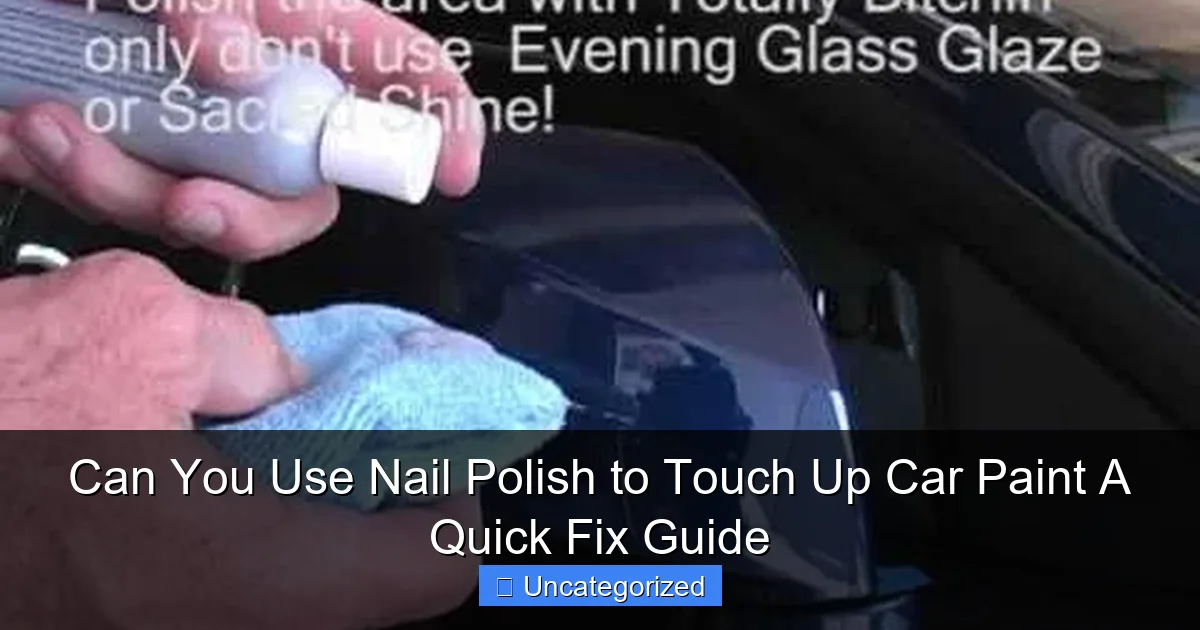
Visual guide about can you use nail polish to touch up car paint
Image source: i.ytimg.com
- Primer Layer: Applied directly to the metal body, this layer prevents rust and ensures adhesion. It’s often gray or white and not visible under normal conditions.
- Basecoat: This is the colored layer that gives your car its signature hue. It’s thin and transparent, allowing depth and shine when combined with the topcoat.
- Clearcoat: A transparent, glossy layer that protects the basecoat from UV rays, weather, and minor abrasions. It’s what gives your car that “wet” look.
When a chip or scratch occurs, it can penetrate one or more of these layers. A shallow scratch may only affect the clearcoat, while a deep chip might expose the primer or even the bare metal. The depth of the damage determines the appropriate repair method.
Types of Paint Damage: When Nail Polish Might Help (and When It Won’t)
Not all paint damage is created equal. Here’s a breakdown of common issues and whether nail polish could be a viable quick fix:
- Surface Scratches (Clearcoat Only): These are shallow and don’t expose lower layers. While nail polish won’t “fill” them, it can mask discoloration and prevent rust if the basecoat is intact.
- Paint Chips (Basecoat Exposed): Small chips that stop at the basecoat (no metal exposed) are prime candidates for nail polish touch-ups. The polish can fill the gap and match the color.
- Deep Scratches (Primer or Metal Exposed): If bare metal is visible, nail polish is not a long-term solution. It won’t prevent rust, and moisture can seep in. Professional repair or a dedicated automotive touch-up kit is required.
- Keyed or Gouged Areas: Deep gouges from vandalism or accidents require body filler, sanding, and repainting. Nail polish will only sit on the surface and peel off.
Pro Tip: Test the depth of a chip with your fingernail. If your nail catches, it’s likely deep and needs more than a cosmetic fix. If it’s smooth, nail polish might work.
The Pros and Cons of Using Nail Polish for Car Touch-Ups
Advantages: Why Nail Polish Might Be Worth a Try
Despite its unconventional nature, nail polish offers several benefits for minor car paint repairs:
- Color Matching: Nail polish comes in thousands of shades, including metallics, glitters, and pearlescent finishes. For older or less common car colors, finding an exact match in automotive touch-up paint can be difficult. Nail polish might offer a closer match than store-bought kits.
- Accessibility: Most people already have nail polish at home. No need to visit an auto parts store or wait for shipping.
- Cost-Effective: A $5 bottle of nail polish is far cheaper than a $20+ automotive touch-up kit, especially if you only need a tiny amount.
- Fast Drying: Nail polish dries in minutes, allowing for quick layering and minimal downtime.
- Ease of Application: The fine brush applicator is perfect for precision work on small chips.
Real-World Example: A 2023 Reddit thread highlighted a user who matched their 1998 Honda Civic’s “Canyon Red” with a discontinued nail polish shade. The repair lasted 6 months before fading, but it prevented rust and looked nearly invisible.
Drawbacks and Risks: When Nail Polish Falls Short
However, using nail polish isn’t without significant drawbacks:
- Durability Issues: Nail polish is formulated for fingernails, not metal exposed to weather, UV rays, and road debris. It’s more prone to chipping, peeling, and fading within weeks or months.
- Chemical Incompatibility: Nail polish solvents can react with automotive clearcoat or primer, causing clouding or lifting of existing paint. This risk is higher with acetone-based polishes.
- No Rust Protection: Unlike automotive touch-up paint, nail polish lacks corrosion inhibitors. If bare metal is exposed, it can start rusting underneath the polish.
- Gloss Mismatch: Nail polish often has a different sheen (matte, glossy, or shimmery) than your car’s factory clearcoat, making repairs noticeable under direct light.
- Difficult to Blend: Achieving a seamless edge with surrounding paint is challenging. Nail polish tends to form a slight ridge or “bead” that’s hard to sand down.
Critical Tip: Avoid using nail polish on areas exposed to high friction (e.g., door handles, wheel wells) or extreme temperatures (e.g., near the engine). It won’t hold up.
Step-by-Step Guide: How to Use Nail Polish for Car Paint Touch-Ups
Materials You’ll Need
Before starting, gather these supplies:
- Matching nail polish (test on a paper first)
- Isopropyl alcohol (90%+) and lint-free cloth
- Fine-grit sandpaper (2000-3000 grit) or a polishing compound
- Toothpick or precision brush (for tiny chips)
- Clear nail polish (optional, for sealing)
- Tack cloth (to remove dust)
- Microfiber cloth
Step 1: Clean and Prep the Area
1. Wash the area with car shampoo to remove dirt and grease.
2. Dry thoroughly.
3. Wipe with isopropyl alcohol to degrease and remove wax. This ensures the nail polish adheres properly.
4. Use a tack cloth to remove any remaining dust.
Why it matters: Contaminants can cause the polish to lift or bubble.
Step 2: Match the Color (Critical!)
1. Test the nail polish on a white sheet of paper. Let it dry for 24 hours to see the true color.
2. Hold the paper next to the car in natural light. Look for subtle differences—metallic flecks, undertones, and brightness.
3. If the match isn’t perfect, try layering two shades (e.g., a red base with a metallic topcoat).
Pro Tip: Use a color-matching app (like Adobe Color) to scan your car and find the closest nail polish shade online.
Step 3: Apply the Nail Polish
1. Shake the bottle well.
2. For small chips, use the nail polish brush or a toothpick to dab a tiny amount into the chip. Avoid overfilling.
3. For larger chips, apply multiple thin layers (let each dry for 5-10 minutes). Thick layers are more likely to crack.
4. If the chip is near an edge, feather the polish outward to blend it.
Caution: Don’t use a hairdryer to speed up drying—heat can cause bubbles or warping.
Step 4: Seal and Blend (Optional)
1. After the final layer dries (24 hours), apply a thin layer of clear nail polish as a sealant. This adds a glossy finish.
2. Use 2000-3000 grit sandpaper to gently level any ridges. Wet-sand with water to avoid scratching.
3. Polish the area with a car wax or glaze to blend the sheen with the surrounding paint.
Note: Sanding is risky—only attempt it if you’re comfortable with paint correction.
Step 5: Maintenance and Monitoring
1. Inspect the repair weekly. Look for peeling, fading, or rust.
2. Reapply nail polish as needed.
3. If rust appears, stop using nail polish and seek professional repair immediately.
Alternatives and When to Upgrade to Professional Solutions
Dedicated Automotive Touch-Up Kits
For a more durable repair, consider a car-specific touch-up kit. These kits typically include:
- Basecoat paint (matched to your VIN)
- Clearcoat pen or spray
- Applicator brushes
- Rust inhibitors
Pros: Better adhesion, UV protection, and color accuracy.
Cons: Higher cost ($15-$50) and longer drying times (24+ hours for clearcoat).
Paint Pens and Aerosols
For larger areas, paint pens offer precision, while aerosol sprays cover more surface area. Brands like Dr. ColorChip use a “micro-filler” technology to blend paint seamlessly.
When to See a Professional
Seek a body shop if:
- Bare metal is exposed (rust risk).
- The damage is larger than a quarter.
- You need a color-matched clearcoat (for depth and shine).
- The repair is on a visible area (e.g., hood, roof).
Cost Comparison: A professional touch-up for a small chip typically costs $100-$200, but it can last for years.
Real-World Data: Nail Polish vs. Professional Repair
| Factor | Nail Polish | Automotive Touch-Up Kit | Professional Repair |
|---|---|---|---|
| Cost | $2-$10 | $15-$50 | $100-$500+ |
| Durability | 1-6 months | 6-24 months | 5+ years |
| Color Match Accuracy | Moderate (depends on shade) | High (VIN-matched) | Perfect |
| Rust Protection | None (unless basecoat intact) | Yes (primer included) | Yes |
| Time to Apply | 15-30 minutes | 30-60 minutes | 1-3 days |
| Best For | Small chips, temporary fixes | Medium chips, long-term DIY | Large damage, showroom finish |
Final Verdict: Is Nail Polish a Smart Fix?
So, can you use nail polish to touch up car paint? The answer is a qualified yes—but with major caveats. Nail polish is a fantastic temporary solution for small, shallow chips where the basecoat is intact. It’s affordable, accessible, and can buy you time until you’re ready for a professional repair. The key is understanding its limitations: it’s not durable, it won’t prevent rust, and it may not blend perfectly. But in a pinch, it can save you from a growing rust spot or a worsening chip.
Think of nail polish as the duct tape of car repairs: not ideal, but sometimes the only option. For a quick fix that stops further damage and improves aesthetics, it’s a surprisingly effective tool. Just remember: this isn’t a permanent solution. Monitor the repair closely, and upgrade to an automotive touch-up kit or professional service when possible. With careful application and realistic expectations, you can turn a nail polish bottle into a handy weapon in your car care arsenal—just don’t expect it to perform like a factory paint job. In the world of DIY car maintenance, sometimes the best fix is the one that keeps you on the road, not the one that wins a beauty contest.
Frequently Asked Questions
Can you use nail polish to touch up car paint for small scratches?
Yes, nail polish can temporarily cover minor scratches or stone chips on car paint, especially if the color matches closely. However, it’s not a permanent solution and may lack the durability of automotive touch-up paint.
Is nail polish safe for car paint in the long term?
While nail polish won’t immediately damage your car’s paint, its solvents and lack of UV protection can cause discoloration or peeling over time. It’s best used as a short-term fix until proper repairs are made.
How do you match nail polish to your car’s paint color?
Bring a small paint chip or your car’s color code to a store to find the closest nail polish shade. Keep in mind that lighting and metallic flakes in car paint can make matching tricky.
Can you use nail polish to touch up car paint on deep scratches?
No, nail polish isn’t ideal for deep scratches that expose metal or primer, as it won’t adhere well or prevent rust. Use a dedicated automotive touch-up kit for deeper damage.
Does nail polish work on all car paint types?
Nail polish works best on solid, non-metallic paint finishes. Metallic or pearlescent car paints require specialized touch-up products to match the finish and texture properly.
How long does nail polish last as a car paint touch-up?
Depending on exposure to weather and washing, nail polish touch-ups may last a few weeks to a couple of months. Reapply as needed, but plan for professional repairs for a lasting finish.