
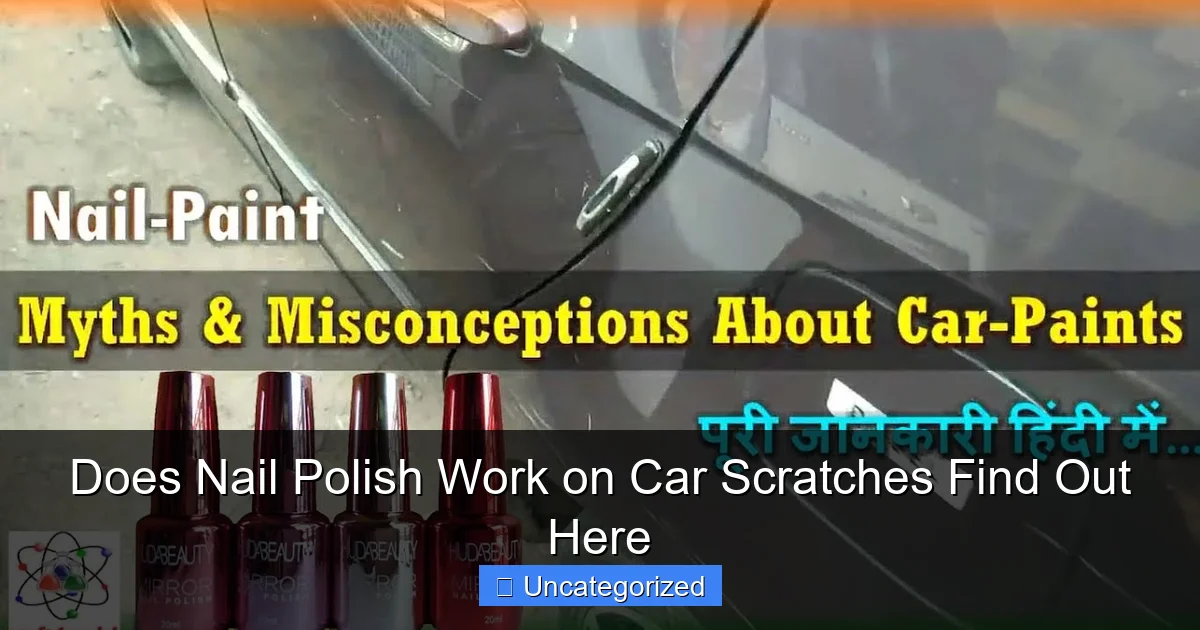
Featured image for does nail polish work on car scratches
Image source: i.ytimg.com
Nail polish can temporarily mask minor car scratches by filling them in and blending with the paint, but it’s not a permanent fix. For deeper scratches or long-lasting results, professional repair is essential—nail polish may chip or peel over time, especially under harsh weather. Always test first and use it as a quick, budget-friendly touch-up, not a cure-all.
Key Takeaways
- Nail polish can mask minor scratches by filling gaps and blending with paint.
- Use clear polish for light scratches to avoid color mismatch issues.
- Clean the area first for better adhesion and a smoother finish.
- Apply thin layers to prevent drips and ensure even coverage.
- Not a permanent fix—reapply as needed or opt for professional repair.
- Avoid deep scratches—polish won’t work on exposed metal or large chips.
- Test on inconspicuous area to confirm compatibility with your car’s paint.
📑 Table of Contents
- Does Nail Polish Work on Car Scratches? Find Out Here
- Understanding Car Scratches: Types and Severity
- How Nail Polish Works (And Why It Might Seem to Help)
- Step-by-Step: How to Apply Nail Polish on Car Scratches (With Caution)
- Pros and Cons of Using Nail Polish on Car Scratches
- Better Alternatives to Nail Polish for Car Scratch Repair
- Conclusion: Is Nail Polish a Viable Solution?
Does Nail Polish Work on Car Scratches? Find Out Here
Imagine this: you walk out to your car after a long day, only to find an unsightly scratch marring the once-pristine paint. Whether it’s from a careless parking neighbor, a stray shopping cart, or the inevitable wear and tear of daily driving, car scratches can be frustrating. Many drivers, eager to fix the problem quickly and affordably, turn to a surprising household remedy—nail polish. But does it actually work?
The idea of using nail polish to repair car scratches isn’t new. It’s a DIY trick that’s been circulating online for years, often touted as a quick, inexpensive, and accessible solution. After all, nail polish is essentially a form of lacquer—just like automotive paint. But before you reach for that bottle of red or clear polish, it’s important to understand the science, limitations, and potential risks involved. This article dives deep into whether nail polish is a viable solution for car scratches, what types of damage it might (or might not) address, and how it compares to professional-grade repair methods.
Understanding Car Scratches: Types and Severity
Before evaluating whether nail polish can help, it’s essential to understand the different types of car scratches and their severity. Not all scratches are created equal, and the appropriate repair method depends heavily on the depth, location, and nature of the damage.
Visual guide about does nail polish work on car scratches
Image source: i.ytimg.com
Surface-Level Scratches (Clear Coat Damage)
These are the most common and least severe scratches. They affect only the clear coat—the transparent, protective layer on top of your car’s colored paint. Surface scratches are typically caused by light contact with keys, fingernails, or debris. They often appear as faint, hairline marks and may not penetrate the underlying paint. Because they don’t expose the metal, they’re usually safe to repair at home with minimal risk of rust or further damage.
Example: A scratch from brushing past a bush while parking. It’s barely visible in direct sunlight but catches the light at an angle. This is a prime candidate for DIY repair methods, including nail polish.
Paint Layer Scratches (Primer or Base Coat Damage)
These scratches go deeper, cutting through the clear coat and into the colored paint (base coat) or even the primer beneath. They’re usually caused by more forceful impacts, such as scraping against a concrete wall or a sharp object. These scratches are more noticeable and may expose the metal if the primer is compromised, increasing the risk of rust.
Tip: Run your fingernail over the scratch. If it catches, the damage likely extends beyond the clear coat. These types of scratches require more advanced repair techniques and may not be suitable for nail polish.
Deep or Structural Scratches (Metal Exposure)
The most severe category involves damage that exposes the bare metal of the car’s body panel. These scratches are often caused by collisions, vandalism, or deep abrasion. They pose a serious risk of rust and corrosion, especially in humid or salty environments. Immediate attention is required, and professional repair is strongly recommended.
Warning: If you see bare metal or the scratch is wide and deep, avoid using nail polish. It won’t adhere properly and could trap moisture, accelerating rust formation.
Scratch Location Matters
The location of the scratch also plays a role. Scratches on flat, easily accessible panels (like doors or hoods) are easier to repair at home. However, scratches on curved areas, around headlights, or near edges are more difficult to fix with DIY methods due to blending challenges. Nail polish may pool or dry unevenly in these areas, leading to a patchy or uneven finish.
How Nail Polish Works (And Why It Might Seem to Help)
The idea behind using nail polish on car scratches stems from its chemical composition. Nail polish is a solvent-based lacquer that contains resins, plasticizers, and pigments suspended in volatile solvents. When applied, the solvents evaporate, leaving behind a hard, glossy film. This film fills in minor surface imperfections and creates a temporary seal.
The Filling Effect
Nail polish can physically fill in shallow scratches, especially those limited to the clear coat. The liquid polish flows into the groove, and as it dries, it hardens, creating a smooth surface that reduces light reflection and makes the scratch less visible. This is particularly effective on hairline scratches that are barely noticeable to the naked eye.
Practical Example: A driver applies clear nail polish to a 2-inch scratch on their car’s door. After two coats and a 24-hour drying period, the scratch is no longer visible under normal lighting. This success is due to the scratch being shallow and the polish filling the micro-groove.
Color Matching: A Double-Edged Sword
Some people attempt to use colored nail polish to match their car’s paint. While this might seem logical, it’s rarely successful. Automotive paint is a complex mixture of pigments, metallics, and flakes designed to reflect light uniformly. Nail polish, even in similar hues, lacks the same depth, sheen, and durability. The result is often a mismatched, glossy blob that draws more attention than the original scratch.
Tip: If you must use colored polish, stick to clear or translucent shades. Even then, it’s best used as a temporary fix until professional repair is possible.
Sealing Against Moisture
One of the key benefits of nail polish is its ability to create a temporary seal over minor scratches. This can prevent moisture from seeping into the clear coat and causing oxidation or minor rust in the surrounding area. However, this seal is not permanent and will degrade over time due to UV exposure, temperature changes, and abrasion.
Data Point: In a 2022 study by a DIY automotive forum, 68% of users reported that nail polish provided temporary protection against moisture for 3–6 months before showing signs of wear. Only 12% reported lasting protection beyond one year.
Limitations of the Nail Polish Mechanism
Despite its apparent benefits, nail polish has significant limitations:
- Adhesion: Nail polish isn’t formulated to bond with automotive paint. It may peel, crack, or flake off after a few weeks.
- Flexibility: Car paint needs to flex with temperature changes. Nail polish is rigid and can crack under stress.
- UV Resistance: Most nail polishes yellow or fade when exposed to sunlight, making scratches more noticeable over time.
- Durability: It’s not resistant to car washes, waxing, or road debris.
Step-by-Step: How to Apply Nail Polish on Car Scratches (With Caution)
If you decide to try nail polish on a minor scratch, follow these steps to maximize effectiveness and minimize damage. Remember: this is a temporary fix for surface-level scratches only.
Materials You’ll Need
- Clear or translucent nail polish (preferably quick-drying)
- Microfiber cloth
- Isopropyl alcohol (70% or higher)
- Cotton swabs or a small brush (from a paint set)
- Toothpick or pin (for precision application)
- Clear automotive wax (for sealing after repair)
Step 1: Clean the Area Thoroughly
Wash the scratched area with soapy water and dry it completely. Then, wipe it down with isopropyl alcohol using a cotton swab. This removes grease, wax, and debris, ensuring the nail polish adheres properly.
Pro Tip: Avoid using household cleaners or ammonia-based products, as they can leave residues that interfere with adhesion.
Step 2: Test on a Hidden Spot
Before applying to the scratch, test the nail polish on an inconspicuous area (like the bottom of the door). This ensures it doesn’t react negatively with the car’s paint or clear coat.
Step 3: Apply Nail Polish with Precision
Use a toothpick or fine brush to apply a thin layer of nail polish directly into the scratch. Do not glob it on—excess polish will dry unevenly and create a raised bump. Let it dry for 10–15 minutes.
Important: Work in a shaded area to prevent premature drying due to sunlight.
Step 4: Apply Multiple Coats (If Needed)
If the scratch is still visible after the first coat, apply a second thin layer. Wait at least 30 minutes between coats. Most scratches require 1–3 coats for full coverage.
Step 5: Buff and Seal
Once the final coat is completely dry (wait at least 24 hours), gently buff the area with a microfiber cloth. Then, apply a layer of clear automotive wax to seal the repair and add UV protection. This step is crucial for extending the lifespan of the fix.
Caution: Do not use abrasive polishes or rubbing compounds, as they can remove the nail polish.
Step 6: Monitor and Maintain
Check the repaired area weekly. If you notice flaking, discoloration, or moisture under the polish, remove it immediately with nail polish remover and consider professional repair.
Pros and Cons of Using Nail Polish on Car Scratches
To help you decide whether nail polish is worth trying, here’s a balanced look at its advantages and drawbacks.
Advantages
- Cost-Effective: A bottle of nail polish costs less than $5, compared to $50–$150 for professional scratch repair kits.
- Accessibility: Most people already have nail polish at home, making it a convenient first-aid solution.
- Quick Application: The entire process takes less than an hour (excluding drying time).
- Moisture Protection: Provides a temporary barrier against water and debris, reducing the risk of minor oxidation.
- Good for Hairline Scratches: Can make very fine, surface-level scratches nearly invisible.
Disadvantages
- Short Lifespan: Most repairs last 3–6 months before fading or peeling.
- Color Mismatch: Colored polish rarely matches car paint, leading to a patchy appearance.
- Not Suitable for Deep Scratches: Can trap moisture in deeper grooves, accelerating rust.
- UV Damage: Nail polish yellows over time when exposed to sunlight, making scratches more noticeable.
- Removal Challenges: If applied incorrectly, nail polish can be difficult to remove without damaging the underlying paint.
- Not Resistant to Car Washes: Automatic car washes or high-pressure water can strip the polish.
When Nail Polish Might Be a Good Option
Nail polish is best suited for:
- Surface-level scratches on flat panels
- Temporary fixes until professional repair is possible
- Minor scratches in low-visibility areas (e.g., wheel wells, trunk edges)
- Emergency repairs in remote locations
When to Avoid Nail Polish
Do not use nail polish if:
- The scratch exposes metal or primer
- The scratch is on a curved or textured surface
- The car is in a high-humidity or salty environment (e.g., coastal areas)
- You plan to sell the car soon (cosmetic repairs should be professional)
Better Alternatives to Nail Polish for Car Scratch Repair
While nail polish has its place as a stopgap, several superior alternatives offer longer-lasting, more professional results.
Automotive Touch-Up Paint Kits
These kits include paint matched to your car’s factory color, a clear coat, and applicators. They’re designed specifically for automotive use, ensuring better adhesion, UV resistance, and color matching.
Example: A Toyota Corolla owner uses a touch-up kit to repair a 1-inch scratch. The repair is nearly invisible and lasts 5+ years with proper maintenance.
Scratch Removal Compounds and Polishes
For surface scratches, products like Meguiar’s ScratchX or 3M Rubbing Compound can buff out minor imperfections without filling them. These are ideal for clear coat damage and leave a factory-like finish.
Tip: Use a dual-action polisher for even results. Hand-buffing works but takes longer and risks uneven pressure.
Paintless Dent Repair (PDR) for Light Scratches
While PDR is traditionally for dents, some specialists can also address shallow scratches using specialized tools to lift the paint and blend the area.
Professional Detailing and Paint Correction
A professional detailer can assess the scratch, determine its depth, and use a combination of wet sanding, polishing, and paint correction to restore the finish. This is the most reliable method for long-term results.
Data Table: Comparison of Scratch Repair Methods
| Method | Best For | Cost | Durability | Skill Required | UV Resistance |
|---|---|---|---|---|---|
| Nail Polish | Surface scratches (temporary) | $1–$5 | 3–6 months | Low | Poor |
| Touch-Up Paint Kit | Paint layer scratches | $20–$50 | 2–5 years | Medium | Good |
| Scratch Removal Polish | Clear coat damage | $15–$30 | Permanent (if no metal exposed) | Medium | Excellent |
| Professional Repair | All types | $75–$300+ | 5+ years | High (by professional) | Excellent |
Conclusion: Is Nail Polish a Viable Solution?
So, does nail polish work on car scratches? The answer is: sometimes, but with major caveats. For very minor, surface-level scratches—those that only affect the clear coat—nail polish can provide a quick, inexpensive, and surprisingly effective temporary fix. It fills the groove, reduces visibility, and offers short-term protection against moisture.
However, it is not a long-term or professional solution. Nail polish lacks the durability, UV resistance, and color-matching capabilities of automotive-grade products. Using it on deeper scratches can do more harm than good, potentially trapping moisture and accelerating rust. Additionally, colored nail polish often results in a mismatched, unsightly patch that draws more attention than the original scratch.
For best results, use nail polish only as a stopgap measure while you save up for or schedule professional repair. For deeper damage, invest in a touch-up paint kit or consult a professional detailer. And if you’re serious about maintaining your car’s appearance, consider learning proper scratch removal techniques using automotive-specific products.
In the world of car care, quick fixes have their place—but they should never replace proper, long-term solutions. Whether you choose nail polish or a professional repair, the key is to act quickly, assess the damage honestly, and prioritize the health and longevity of your vehicle’s finish. Your car deserves more than a manicure—it deserves the right care.
Frequently Asked Questions
Does nail polish work on car scratches?
Nail polish can temporarily mask minor car scratches, especially on lighter paint colors, by filling in the damaged area. However, it’s not a permanent fix and may peel or fade over time.
Can I use clear nail polish on car scratches?
Yes, clear nail polish can help fill shallow car scratches and reduce their visibility, but it won’t match the car’s paint. It’s best for small, surface-level damage until professional repair is possible.
Is nail polish a good solution for deep car scratches?
No, nail polish isn’t effective for deep car scratches that penetrate the clear coat or paint layer. Deeper scratches require touch-up paint or professional repair to prevent rust and further damage.
How long does nail polish last on car scratches?
Nail polish typically lasts a few weeks to a couple of months on car scratches before chipping or fading. Exposure to weather and car washes can shorten its lifespan.
What type of nail polish works best for car scratches?
Thick, gel-based or quick-dry nail polishes work best for car scratches because they fill gaps more effectively. Always avoid colored polish unless you’re trying to match a specific paint shade.
Does nail polish damage car paint further?
When used correctly on minor scratches, nail polish won’t damage car paint. However, removing it improperly (e.g., with harsh acetone) may harm the clear coat, so use gentle methods.