
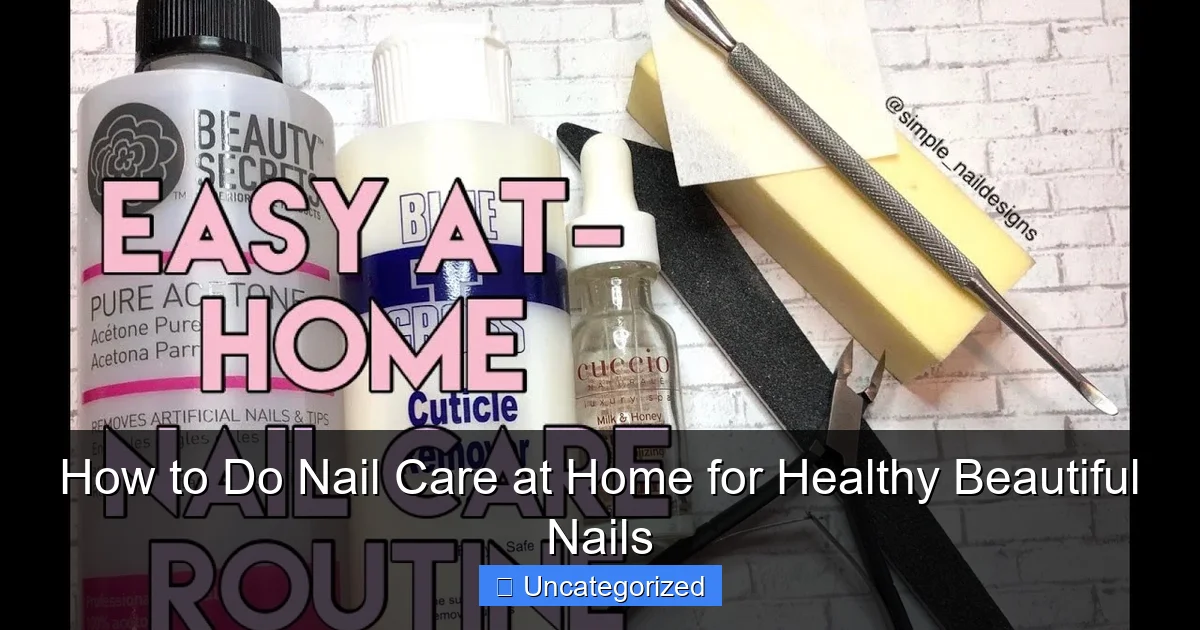
Featured image for how to do nail care at home
Image source: i.ytimg.com
Mastering nail care at home starts with consistent hygiene and proper tool use—always clean and trim nails regularly to prevent breakage and infections. Combine this with moisturizing cuticle oil, gentle filing, and protective base coats to keep nails strong and shiny without salon visits. A simple routine of hydration, protection, and patience transforms brittle nails into healthy, beautiful ones effortlessly.
Key Takeaways
- Trim regularly: Cut nails straight across to prevent ingrown nails.
- Moisturize daily: Apply cuticle oil to keep nails hydrated and strong.
- Use gentle tools: Opt for glass files to avoid nail splitting.
- Limit polish remover: Use acetone-free remover to prevent dryness.
- Protect your hands: Wear gloves during chores to shield nails.
- Buff for shine: Lightly buff nails for a natural, healthy glow.
📑 Table of Contents
Understanding the Importance of Nail Care
Nails are more than just a canvas for colorful polish or a trendy manicure—they are a reflection of your overall health and hygiene. Whether you’re aiming for a polished, professional look or simply want to maintain strong, healthy nails, proper nail care at home is essential. Many people overlook their nails until problems arise—brittle tips, hangnails, or fungal infections—but with a consistent and mindful routine, you can prevent these issues and enjoy beautiful, resilient nails year-round.
Taking care of your nails doesn’t require expensive salon visits or professional tools. With the right knowledge and a few quality products, you can achieve salon-quality results from the comfort of your own home. From understanding your nail type to mastering cuticle care and choosing the right products, this guide will walk you through every step of an effective at-home nail care regimen. By the end, you’ll have the tools and confidence to maintain strong, healthy, and aesthetically pleasing nails without stepping foot in a nail salon.
Assessing Your Nail Health and Type
Identifying Your Nail Type
Before diving into a nail care routine, it’s crucial to understand your unique nail type. Not all nails are created equal, and what works for one person may not suit another. There are four primary nail types:
Visual guide about how to do nail care at home
Image source: i.ytimg.com
- Normal nails: Strong, smooth, and free of ridges or discoloration. They grow steadily and don’t chip easily.
- Brittle nails: Prone to splitting, peeling, and breaking. Often caused by frequent exposure to water, harsh chemicals, or nutritional deficiencies.
- Soft nails: Bend easily and may feel rubbery. Common in people who work with their hands or use acetone-based removers frequently.
- Thick nails: Often associated with aging, fungal infections, or trauma. May be difficult to trim and prone to discoloration.
Knowing your nail type helps you tailor your nail care at home routine. For example, brittle nails benefit from moisturizing treatments, while soft nails need protein-rich strengtheners.
Signs of Nail Problems to Watch For
Your nails can act as a diagnostic tool for underlying health conditions. Pay attention to these warning signs:
- Yellowing: Could indicate fungal infection, excessive use of dark polish, or respiratory issues.
- Vertical ridges: Usually harmless and common with aging, but sudden changes should be checked.
- White spots: Often due to minor trauma (like bumping your nail), not zinc deficiency as commonly believed.
- Clubbing (rounded, bulbous nails): May signal lung or heart disease.
- Spoon-shaped nails (koilonychia): Can be linked to iron deficiency or thyroid issues.
If you notice persistent or unusual changes, consult a dermatologist or healthcare provider. Early detection can prevent complications and guide your home care strategy.
Creating a Nail Health Journal
To monitor progress and identify triggers, keep a simple nail health journal. Track:
- Weekly nail growth rate
- Changes in texture or color
- Products used (soaps, polishes, removers)
- Hand-washing frequency
- Any injuries or trauma
After 4–6 weeks, patterns will emerge. For instance, you might notice your nails become brittle after using a new dishwashing liquid—prompting you to switch to gloves or a gentler product. This personalized data makes your nail care at home routine more effective.
Building Your At-Home Nail Care Toolkit
Essential Tools for Nail Maintenance
You don’t need a salon-sized kit, but a few quality tools make all the difference. Here’s what to include in your home nail care arsenal:
- Nail clippers: Choose sharp, stainless steel clippers with a curved edge for natural nail shape.
- Nail file: Use a glass (crystal) or fine-grit emery board (180–240 grit). Avoid metal files—they cause micro-tears.
- Cuticle pusher and nipper: A rubber or wooden pusher gently moves cuticles back. Nippers (use sparingly) remove loose hangnails.
- Nail buffer: A 4-way buffer smooths ridges, adds shine, and preps for polish.
- Nail brush: Soft-bristled brush for cleaning under nails and removing polish residue.
- Orange stick: Handy for cleaning under nails, pushing back cuticles, and applying treatments.
Pro tip: Clean your tools weekly with rubbing alcohol to prevent bacterial buildup. Store them in a dry, closed container to avoid rust and contamination.
Choosing the Right Nail Products
Not all nail products are created equal. Prioritize quality over quantity:
- Base coat: Protects nails from staining and strengthens weak nails. Look for formulas with calcium or keratin.
- Nail strengthener: Use weekly for brittle or soft nails. Avoid formaldehyde-heavy products—opt for formaldehyde-free options.
- Cuticle oil: Hydrates and promotes healthy nail growth. Choose oils with jojoba, vitamin E, or argan oil.
- Moisturizing hand cream: Apply after every hand wash. Seek ceramides, glycerin, or shea butter.
- Nail polish remover: Use acetone-free removers (especially for weak nails). Acetone dries out nails but works faster on glitter polish.
For example, if you have brittle nails, a weekly treatment with a keratin-infused strengthener (like OPI Nail Envy) paired with nightly cuticle oil can yield visible results in 3–4 weeks.
DIY Nail Care Recipes
For those who prefer natural solutions, try these homemade treatments:
- Honey and lemon soak: Mix 1 tbsp honey, 1 tbsp lemon juice, and 1 cup warm water. Soak nails for 10 minutes to brighten and moisturize.
- Olive oil and tea tree oil cuticle treatment: Combine 2 tbsp olive oil with 3 drops tea tree oil. Massage into cuticles nightly to prevent dryness and infection.
- Baking soda scrub: Mix 1 tsp baking soda with 1 tbsp water to form a paste. Gently scrub under nails to remove buildup.
Always patch-test DIY recipes on a small area first. While natural, ingredients like lemon juice can cause irritation or photosensitivity.
Daily and Weekly Nail Care Routines
Morning and Evening Habits
Consistency is key. Integrate these habits into your daily life:
- Morning: Apply hand cream and cuticle oil after washing your face. Massage for 30 seconds to boost circulation.
- After hand washing: Reapply hand cream—especially important for healthcare workers or frequent hand-washers.
- Evening: Soak nails in warm water for 5 minutes. Push back cuticles gently with an orange stick. Apply cuticle oil and a thick moisturizer (like CeraVe Healing Ointment).
Example routine: A teacher who washes hands 20+ times daily might use a lightweight, fast-absorbing hand cream (like Neutrogena Norwegian Formula) during the day and a heavy balm at night.
Weekly Deep-Care Routine
Once a week, dedicate 20–30 minutes to a thorough nail treatment:
- Clean: Remove polish with acetone-free remover. Scrub nails with a nail brush and soapy water.
- Soak: Soak in warm water with 1 tbsp Epsom salt for 10 minutes to soften cuticles and reduce inflammation.
- Trim and file: Clip nails straight across, then round the corners. File in one direction to prevent splitting.
- Cuticle care: Gently push back cuticles. Never cut them—this invites infection. Use nippers only on loose, dead skin (hangnails).
- Buff: Use a 4-way buffer: 1st side smooths ridges, 2nd side removes shine, 3rd side polishes, 4th side adds shine.
- Hydrate: Apply cuticle oil and hand cream. For extra hydration, wear cotton gloves overnight.
For soft nails, skip the buffing step and use a strengthening base coat instead. For thick nails, use a coarse file (100–180 grit) but avoid over-filing.
Seasonal Adjustments
Your routine should adapt to seasonal changes:
- Winter: Increase moisturizing frequency. Use a humidifier indoors to combat dry air. Wear gloves when outdoors.
- Summer: Protect nails from chlorine and saltwater with a base coat. Apply hand cream after swimming or sun exposure.
- Spring/Fall: Focus on exfoliation—use a gentle scrub to remove dead skin buildup from seasonal transitions.
During winter, a freelance writer might apply hand cream 5–6 times daily and use a cuticle balm with lanolin for intense hydration.
Advanced Techniques for Stronger, Longer Nails
Nail Strengthening Treatments
Beyond daily care, targeted treatments accelerate growth and resilience:
- Protein masks: Use a nail treatment with hydrolyzed keratin or silk protein (e.g., CND Rescue RXx) 2–3 times weekly.
- Oil soaks: Soak nails in warm olive oil or coconut oil for 15 minutes weekly. Wrap in warm towels for deeper penetration.
- Nutrient supplements: Biotin (1000–2500 mcg/day), vitamin B12, and omega-3s support nail health. Consult a doctor before starting supplements.
After 6 weeks of nightly cuticle oil and a biotin supplement, a nurse reported a 30% reduction in nail splitting.
Preventing Common Nail Damage
Many habits unknowingly damage nails:
- Using nails as tools: Avoid opening cans, peeling stickers, or scratching surfaces.
- Overexposure to water: Wear gloves when washing dishes or cleaning.
- Harsh chemicals: Use non-acetone removers and avoid prolonged contact with bleach.
- Improper filing: File in one direction (side to center) to prevent splitting.
- Wearing polish too long: Give nails a 1–2 week “breathing” period between manicures.
A graphic designer who used their nails to peel tape noticed improved strength after switching to a plastic scraper and applying a protective base coat.
Promoting Nail Growth
While genetics determine growth rate (average: 3 mm/month), you can optimize conditions:
- Massage cuticles: Stimulates blood flow. Use circular motions for 1 minute per hand.
- Keep nails short: Long nails are more prone to trauma, which slows growth.
- Balanced diet: Eat protein (eggs, fish), iron (spinach, lentils), and zinc (pumpkin seeds).
- Stay hydrated: Dehydration makes nails brittle.
Pair growth-promoting habits with a weekly “nail gym” session: Soak, massage, and apply a growth serum (like Sally Hansen Nail Growth Miracle).
Styling and Polishing at Home
Perfecting the Manicure
A flawless at-home manicure requires precision:
- Prep: Clean, shape, and buff nails as in the weekly routine.
- Base coat: Apply one thin layer. Let dry completely (3–5 minutes).
- Color: Apply polish in three strokes (center, left, right). Use two thin coats for even coverage.
- Top coat: Seal with a glossy top coat. Use a “floating” technique (don’t press hard) to avoid smudging.
- Cleanup: Dip a small brush in remover to tidy edges.
Pro tip: Chill polish in the fridge before use to prevent streaking and bubbles.
Choosing and Applying Nail Polish
Select polishes based on your nail needs:
- Strengthening: Look for “5-free” formulas (no formaldehyde, toluene, DBP, etc.).
- Long-wear: Gel polishes last 7–14 days but require UV/LED lamp curing.
- Breathable: Water-based polishes (like Zoya) allow oxygen exchange.
For a 30-second manicure fix, use a nail pen to touch up chips instead of redoing the entire nail.
Removing Polish Safely
Improper removal causes damage:
- Acetone-free remover: Soak a cotton pad, press on nail for 10 seconds, then wipe—don’t rub.
- Acetone remover: Use only for glitter or gel polish. Limit to once every 2 weeks.
- Aftercare: Immediately apply cuticle oil and hand cream post-removal.
A student who removed glitter polish with foil wraps (acetone-soaked cotton + foil) reported 50% less dryness than using liquid remover.
| Nail Care Task | Frequency | Recommended Products | Time Required |
|---|---|---|---|
| Hand cream application | After every hand wash | Neutrogena Norwegian Formula, CeraVe | 30 seconds |
| Cuticle oil | Nightly | CND SolarOil, Sally Hansen | 1 minute |
| Weekly soak & push back | Once weekly | Epsom salt, wooden pusher | 20 minutes |
| Nail trimming/filing | Every 1–2 weeks | Stainless steel clippers, 180-grit file | 10 minutes |
| Deep moisturizing | Weekly | Shea butter balm, cotton gloves | Overnight |
| Manicure | Every 1–2 weeks | 5-free polish, top coat | 30–45 minutes |
Long-Term Nail Health and Troubleshooting
Maintaining Results
Consistency beats intensity. Stick to your routine even when nails look healthy. Track progress with monthly photos to spot improvements (or issues) early.
Common Mistakes to Avoid
- Cutting cuticles: This invites infection. Only push them back.
- Over-buffing: Can thin nails. Limit to once weekly.
- Using expired polish: Thick, clumpy polish is hard to apply and may contain bacteria.
- Ignoring pain or discoloration: Persistent issues need professional evaluation.
When to Seek Professional Help
See a dermatologist if you experience:
- Severe pain, swelling, or pus (possible infection)
- Sudden nail separation (onycholysis)
- Unexplained discoloration or thickening
- No improvement after 8 weeks of home care
With the right approach, nail care at home transforms from a chore into a self-care ritual. By understanding your nails, using quality tools, and staying consistent, you’ll enjoy strong, beautiful nails that reflect your dedication. Remember: Healthy nails start with small, daily choices—not occasional grand gestures. Start today, and let your hands tell a story of health and confidence.
Frequently Asked Questions
How can I strengthen my nails at home?
Keep nails hydrated with cuticle oil and hand cream, and avoid harsh chemicals. A diet rich in biotin (like eggs and nuts) and using a strengthening base coat can also help improve nail resilience over time.
What’s the best way to do nail care at home daily?
Moisturize hands and cuticles twice daily, wear gloves when cleaning, and gently push back cuticles after showering. Regular filing with a fine-grit file and avoiding nails as tools prevents splits and breaks.
How do I remove gel polish without damaging my nails?
Soak a cotton pad with acetone, press it onto the nail, and wrap it in foil for 10 minutes to dissolve the polish. Never peel or scrape—this thins the nail and causes long-term damage.
Can I do nail care at home if I have brittle nails?
Yes—limit water exposure, use a nail hardener, and apply a nourishing treatment like jojoba oil. Wear gloves during chores to shield nails from moisture and detergents, which weaken them.
How often should I trim and file my nails?
Trim every 1–2 weeks to maintain shape and prevent snags. File weekly with a glass or fine-grit file in one direction to reduce splitting and maintain a smooth edge.
Are DIY nail soaks effective for nail care?
Yes—try a 10-minute soak in warm olive oil or diluted apple cider vinegar to hydrate and disinfect nails. Follow with a rich moisturizer to lock in benefits and improve shine.