
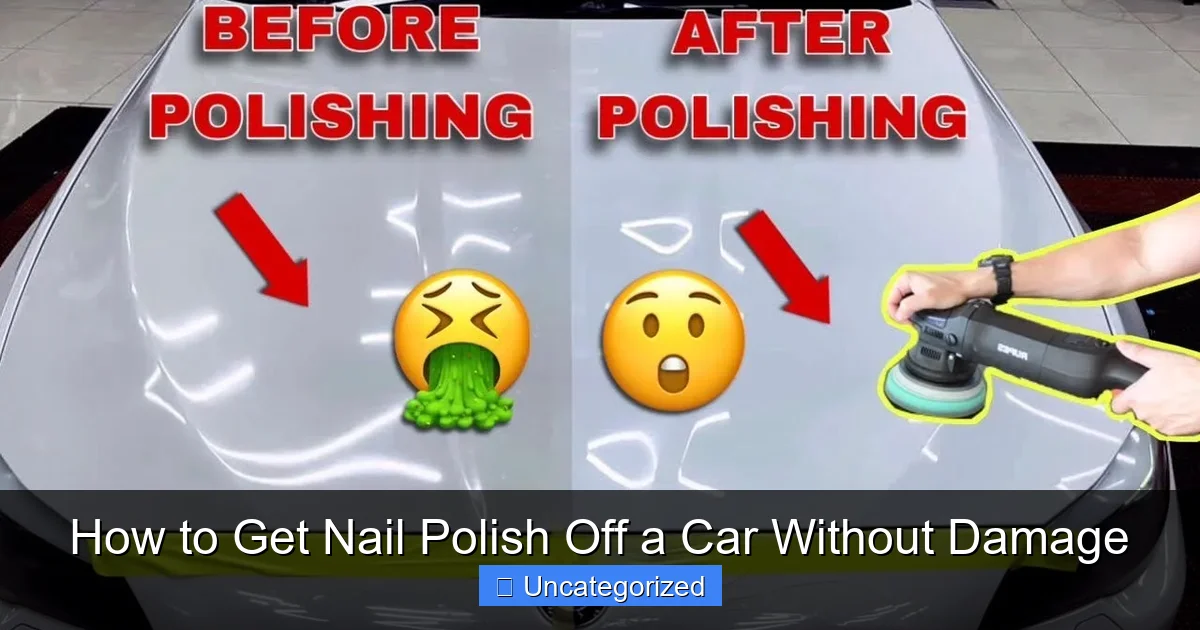
Featured image for how to get nail polish off a car
Image source: i.ytimg.com
Act fast and use a high-quality automotive clay bar to safely lift nail polish from your car’s surface without scratching the paint. For fresh spills, gently dab with a microfiber cloth and isopropyl alcohol (70% or less), avoiding harsh scrubbing to prevent clear coat damage. Always follow up with a wax or sealant to restore protection and shine after removal.
Key Takeaways
- Act fast: Remove spills immediately to prevent paint damage.
- Use non-acetone remover: Safely dissolves polish without harming clear coat.
- Test first: Always check cleaning products on a hidden area.
- Blot, don’t rub: Prevents spreading and scratching the surface.
- Wax after removal: Restores shine and protects the paint.
- Avoid harsh tools: Use microfiber cloths, not steel wool or scrapers.
📑 Table of Contents
- Why Removing Nail Polish from a Car Requires Care and Precision
- Understanding Nail Polish and Car Paint: The Science Behind the Stain
- Immediate Actions: What to Do When Nail Polish Spills on Your Car
- Step-by-Step Methods for Removing Dried Nail Polish
- Special Considerations: Removing Nail Polish from Glass, Plastic, and Trim
- Prevention and Long-Term Care: Protecting Your Car from Future Stains
- Conclusion: A Stain-Free Car is Within Reach
Why Removing Nail Polish from a Car Requires Care and Precision
We’ve all been there—perhaps you were painting your nails in the driveway, or a child got a little too curious with a bottle of vibrant red polish. Before you know it, splatters of nail polish are marring the pristine finish of your car. It’s a frustrating situation, especially when the last thing you want is to damage your vehicle’s paint job while trying to fix the mistake. Unlike water-based stains or dirt, nail polish is a polymer-based lacquer designed to bond tightly to surfaces, including automotive paint, plastic trim, and glass. This makes it notoriously difficult to remove without the right approach. The good news? With the proper tools, techniques, and a bit of patience, you can get nail polish off a car without leaving behind swirls, scratches, or chemical damage.
Many car owners panic and reach for harsh chemicals like acetone or paint thinners, thinking they’ll quickly dissolve the polish. However, these substances can strip wax, dull clear coat, and even degrade rubber and plastic components. The key to success lies in understanding the composition of nail polish and using targeted, paint-safe methods. Whether the spill is fresh or has already dried, there are effective strategies to restore your car’s finish. In this guide, we’ll walk you through step-by-step techniques, product recommendations, and preventive tips to handle nail polish removal safely and efficiently. From DIY home remedies to professional-grade products, you’ll learn how to tackle this common household mishap without compromising your car’s value or appearance.
Understanding Nail Polish and Car Paint: The Science Behind the Stain
To effectively remove nail polish from a car, it’s essential to understand what you’re dealing with. Nail polish isn’t just colored liquid—it’s a complex mixture of solvents, resins, pigments, and film-forming polymers. When applied, the solvent (usually ethyl acetate or butyl acetate) evaporates, leaving behind a hard, glossy film that adheres tightly to surfaces. This adhesion is what makes it so difficult to wipe away, especially on non-porous materials like automotive paint.
Visual guide about how to get nail polish off a car
Image source: i.ytimg.com
How Nail Polish Bonds to Car Surfaces
Car paint consists of multiple layers: primer, base coat (color), and clear coat (protective top layer). The clear coat is designed to resist UV rays, scratches, and chemicals, but it’s not immune to solvents. Nail polish bonds to the clear coat through intermolecular forces, particularly van der Waals forces and hydrogen bonding. Over time, especially when exposed to sunlight or heat, the polish can begin to cure further, making it more tenacious. On glass, the bond is weaker, but on painted surfaces and plastic trim, it can become nearly permanent if not treated promptly.
Risks of Improper Removal
- Clear coat damage: Using acetone or alcohol-based removers too aggressively can strip the protective clear coat, leading to dull spots or hazing.
- Plastic and rubber degradation: Acetone can cause plastic trim and rubber seals to crack, warp, or become brittle over time.
- Swirl marks and micro-scratches: Scrubbing with abrasive cloths or steel wool can leave permanent marks on the paint.
- Wax and sealant removal: Harsh solvents may also strip away protective coatings, leaving the paint vulnerable to environmental damage.
For example, a common mistake is using a cotton ball soaked in acetone and scrubbing the affected area. While this might remove the polish, it often leaves behind a cloudy, matte patch where the clear coat has been compromised. The goal is to dissolve the polish without affecting the underlying paint or trim.
Types of Nail Polish and Their Removal Challenges
Not all nail polishes are created equal. Here’s how different types behave on car surfaces:
- Regular (solvent-based) polish: Most common; responds well to acetone but requires caution on paint.
- Gel polish: Cured with UV light; more durable and harder to remove. May require soaking or specialized gel removers.
- Shellac or hybrid polishes: Combine gel and traditional formulas; often need acetone-based removers with added conditioners.
- Water-based polish: Rare; easier to remove with soap and water, but still adheres to paint.
Understanding the type of polish can help you choose the right removal method and avoid unnecessary damage.
Immediate Actions: What to Do When Nail Polish Spills on Your Car
Time is of the essence when dealing with fresh nail polish spills. The longer the polish sits, the more it bonds to the surface and begins to cure. Acting quickly increases your chances of a full, damage-free removal. Here’s what to do the moment you notice the spill.
Step 1: Contain the Spill
If the nail polish bottle tips over or spills, your first move should be containment. Use a clean, lint-free microfiber towel or paper towel to blot (not wipe) the spill. Press down gently to absorb excess liquid. Avoid wiping, as this can spread the polish and embed it into crevices or seams. If the spill is on a horizontal surface (like the hood), tilt the car slightly if safe to do so, allowing gravity to help pool the polish for easier collection.
Step 2: Use a Solvent-Safe for Fresh Polish
For fresh spills, a mild solvent like isopropyl alcohol (70% or higher) or a dedicated non-acetone nail polish remover can be effective. These are less harsh than pure acetone and are safer for paint. Here’s how:
- Dampen a corner of a microfiber cloth with the solvent.
- Gently dab the affected area. Let the solvent sit for 10–15 seconds to loosen the polish.
- Blot again to lift the polish. Repeat as needed.
- Wipe the area with a clean, damp cloth to remove any residue.
Tip: Test the solvent on a small, inconspicuous area (like the inside of the fuel door) first to ensure it doesn’t discolor or damage the paint.
Step 3: Rinse and Dry
After removing the polish, rinse the area with lukewarm water and a pH-neutral car shampoo. This helps remove any residual solvent that could degrade wax or sealant. Dry thoroughly with a clean microfiber towel to prevent water spots. For example, if polish spilled on your car’s side mirror, use a spray bottle with soapy water to rinse the crevices where polish might have pooled.
When to Avoid DIY and Call a Professional
If the spill covers a large area (e.g., an entire door), or if the polish is already dry, do not attempt aggressive scrubbing. Instead, consider calling a professional detailer. They have access to paint-safe solvents, clay bars, and polishing equipment that can remove the stain without risking damage. For instance, a detailer might use a paint-safe polish remover gel that clings to vertical surfaces and dissolves the stain over time.
Step-by-Step Methods for Removing Dried Nail Polish
When nail polish has dried, removal becomes more challenging but still manageable with the right approach. The goal is to soften the polish so it can be lifted without abrasion. Below are proven methods for dried polish on paint, glass, and trim.
Method 1: Acetone with Paint Protection (Use with Caution)
Acetone is a powerful solvent but should be used only on paint and never on plastic or rubber. Here’s the safe way:
- Apply a small amount of 100% pure acetone to a cotton ball or microfiber cloth.
- Place the soaked cloth over the dried polish and let it sit for 30–60 seconds. This softens the polish without scrubbing.
- Gently lift the cloth—the polish should come off with it. If not, repeat.
- Immediately wipe the area with a damp cloth and apply car wax to restore protection.
Warning: Never let acetone sit for more than 2 minutes, and avoid contact with trim, headlights, or rubber seals.
Method 2: Non-Acetone Removers for Delicate Surfaces
For plastic trim, rubber, or areas near seams, use a non-acetone nail polish remover with added conditioners (e.g., Cutex Advanced Revival). These are gentler and less likely to cause damage. Apply with a cotton swab for precision, then wipe clean with a damp cloth. For example, if polish dripped onto your car’s door handle, a cotton swab dipped in non-acetone remover can clean it without harming the plastic.
Method 3: Heat and Steam for Stubborn Spots
Heat helps soften dried polish. Use a hair dryer on low heat (6 inches from the surface) for 1–2 minutes. Then, use a plastic razor blade (for glass) or a clay bar (for paint) to gently lift the polish. For glass, a steam cleaner (like a garment steamer) can loosen the bond without scratching. This method is ideal for small, dried spots on windshields or side windows.
Method 4: Clay Bar Treatment for Embedded Polish
If polish has bonded deeply into the paint, a car clay bar can help. Lubricate the area with a detailing spray or quick detailer, then glide the clay bar over the stain. The bar will pull out contaminants, including polish residue. Follow up with a paint sealant to restore shine. This is especially useful if the polish left a rough texture.
Method 5: Commercial Paint-Safe Polymers
Products like Chemical Guys Nail Polish Remover or Meguiar’s Ultimate Compound are formulated to dissolve polish without harming paint. Apply a small amount to a foam applicator, work in circular motions, and wipe clean. These are ideal for larger stains or when DIY methods fail.
Special Considerations: Removing Nail Polish from Glass, Plastic, and Trim
Nail polish behaves differently on various car surfaces. What works on paint might ruin plastic or glass. Here’s how to handle each.
Glass Surfaces (Windshield, Windows)
Glass is non-porous, so polish doesn’t bond as tightly. Use a plastic razor blade with a lubricating solution (soapy water or glass cleaner). Hold the blade at a 30-degree angle and scrape gently. For dried polish, apply isopropyl alcohol first to soften it. Avoid metal scrapers—they can scratch glass.
Tip: For tinted windows, check the tint manufacturer’s guidelines. Some solvents can damage the adhesive layer.
Plastic Trim and Moldings
Plastic is sensitive to solvents. Use a non-acetone remover or a mixture of 1 part white vinegar to 3 parts water. Apply with a cotton swab, let sit for 30 seconds, then wipe clean. For textured trim, use an old toothbrush to agitate the polish. If the trim is discolored, a plastic restorer (like Mothers Back-to-Black) can help.
Rubber Seals and Gaskets
Rubber can crack or swell when exposed to acetone. Use a diluted dish soap solution (1:10 with water) and a soft brush. For stubborn spots, a rubber-safe cleaner (e.g., 303 Rubber Protectant) can dissolve polish without damage.
Headlights and Tail Lights
Polycarbonate headlights can cloud with acetone. Use a headlight polish kit (e.g., Meguiar’s Headlight Restoration Kit) after removing the polish. Apply a UV protectant sealant to prevent future yellowing.
Prevention and Long-Term Care: Protecting Your Car from Future Stains
Prevention is always better than cure. Here’s how to avoid nail polish spills and maintain your car’s finish.
Create a Safe Nail-Painting Zone
- Paint nails indoors, away from open car doors or windows.
- Use a portable nail station with a tray and lid to contain spills.
- Keep nail polish bottles in a sealed container when transported.
Regular Detailing Routine
A well-maintained car is more resistant to stains. Follow these steps:
- Wash monthly with pH-balanced car shampoo.
- Apply a ceramic coating or wax every 3–6 months to create a protective barrier.
- Use a clay bar every 6 months to remove embedded contaminants.
Emergency Kit for Stains
Keep a car stain emergency kit in your trunk with:
- Microfiber towels
- Isopropyl alcohol (70%)
- Non-acetone nail polish remover
- Plastic razor blade
- Quick detailer spray
For example, if you notice a fresh polish spill at a parking lot, you can act immediately before it dries.
Data Table: Recommended Products for Nail Polish Removal
| Product | Best For | Key Features | Price Range |
|---|---|---|---|
| Chemical Guys Nail Polish Remover | Paint, glass | Paint-safe, no acetone, fast-acting | $10–$15 |
| Cutex Advanced Revival (Non-Acetone) | Plastic, trim | Moisturizing, gentle, no fumes | $5–$8 |
| Meguiar’s Ultimate Compound | Paint, headlights | Removes stains, restores gloss | $15–$20 |
| Clay Magic Clay Bar Kit | Paint, glass | Removes embedded polish, safe for clear coat | $20–$25 |
| 303 Rubber Protectant | Rubber seals | Non-greasy, UV protection | $8–$12 |
Conclusion: A Stain-Free Car is Within Reach
Removing nail polish from a car doesn’t have to be a stressful ordeal. By understanding the science behind the stain, acting quickly, and using the right tools, you can restore your vehicle’s finish without damage. Whether the polish is fresh or dried, on paint, glass, or trim, there’s a method tailored to the situation. The key is to prioritize safety over speed—avoiding harsh solvents on sensitive surfaces and always testing products first. With the techniques outlined in this guide, you’ll not only remove the stain but also protect your car’s value and appearance for years to come.
Remember, prevention is your best defense. A simple habit of painting nails indoors or keeping a stain kit in your car can save you hours of cleanup. And when in doubt, don’t hesitate to consult a professional detailer. Your car deserves the best care—and now, you have the knowledge to give it just that. From minor splatters to stubborn stains, you’re equipped to handle any nail polish mishap with confidence and precision.
Frequently Asked Questions
How can I remove nail polish from my car without damaging the paint?
Use a gentle, non-abrasive method like applying rubbing alcohol or a dedicated automotive polish remover with a microfiber cloth. Test any product on a small, hidden area first to ensure it won’t harm the finish.
What’s the safest way to get nail polish off a car surface?
The safest method is to soak a cotton ball in acetone-free nail polish remover and gently dab the affected area, avoiding prolonged contact. Follow up with car wax to restore shine and protect the paint.
Can I use regular nail polish remover to get nail polish off a car?
Yes, but only acetone-based removers in small amounts and with caution, as they can strip wax or damage paint. Always dilute with water and rinse immediately after removing the polish.
How do I remove dried nail polish from my car’s exterior?
Soften the polish with warm soapy water, then use a plastic scraper to lift it gently. Finish with a clay bar treatment to remove any residue and smooth the surface.
Are there any DIY methods to remove nail polish from a car?
Try using a paste of baking soda and water or a mixture of vinegar and olive oil to loosen the polish before wiping it off. Always rinse thoroughly and dry the area afterward.
What tools should I avoid when removing nail polish from a car?
Avoid metal scrapers, harsh chemicals like bleach, or abrasive scrubbers, as they can scratch or corrode the paint. Stick to soft cloths, plastic tools, and automotive-safe cleaners for safe removal.