
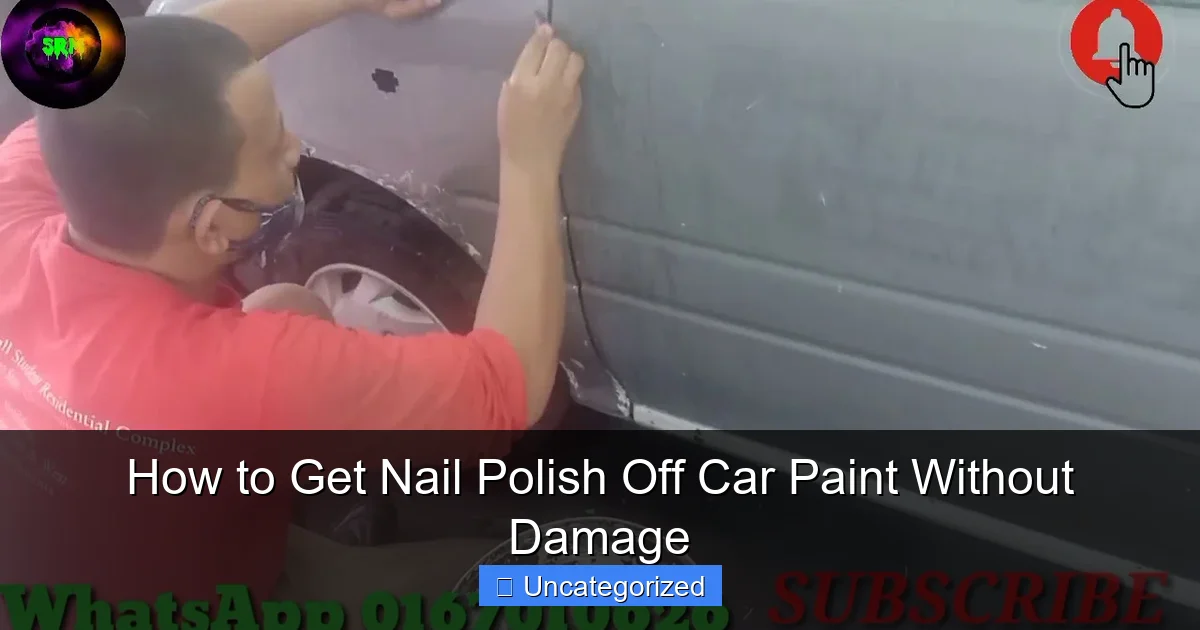
Featured image for how to get nail polish off car paint
Image source: i.ytimg.com
Act quickly and use a dedicated automotive nail polish remover or isopropyl alcohol to safely dissolve polish without harming your car’s paint. Avoid abrasive tools or harsh chemicals like acetone, which can strip wax and damage the clear coat. Always test on a small area first and follow up with a gentle car wash to restore shine and protection.
Key Takeaways
- Act fast: Remove polish immediately to prevent paint damage.
- Use non-acetone remover: Safely dissolves polish without harming paint.
- Test first: Always patch-test on a small area before full application.
- Gentle wiping: Blot, don’t scrub, to avoid scratching the surface.
- Wash afterward: Clean the area with car soap to remove residue.
- Avoid harsh tools: Skip steel wool or abrasive pads to protect paint.
📑 Table of Contents
- How to Get Nail Polish Off Car Paint Without Damage
- Understanding Nail Polish and Car Paint Compatibility
- Essential Tools and Safe Solvents for Removal
- Step-by-Step Removal Methods (From Mild to Aggressive)
- Preventing Damage: Best Practices and Common Mistakes
- Preventing Future Nail Polish Accidents
- Conclusion
How to Get Nail Polish Off Car Paint Without Damage
Few things are as frustrating as discovering a splatter of nail polish on your car’s pristine paint job. Whether it happened during a hasty manicure in the driveway, a spill from a dropped bottle, or an accidental flick of the brush, nail polish can seem like a nightmare to remove. Unlike water-based stains, nail polish is formulated with solvents and pigments that can bond stubbornly to automotive surfaces. The last thing you want is to damage your vehicle’s finish while trying to fix the problem. Fortunately, with the right tools, techniques, and a little patience, you can remove nail polish from car paint safely and effectively—without leaving behind swirls, scratches, or chemical damage.
This comprehensive guide will walk you through proven methods to tackle nail polish stains, whether they’re fresh or have dried for days. We’ll cover everything from immediate response strategies to advanced removal techniques, emphasizing safety for both your car’s paint and your health. You’ll learn which household products work best, which ones to avoid, and how to prevent future mishaps. By the end, you’ll be equipped with the knowledge to restore your car’s finish to showroom quality—without spending a fortune on professional detailing. Let’s dive into the science and practical steps behind how to get nail polish off car paint without damage.
Understanding Nail Polish and Car Paint Compatibility
What’s in Nail Polish?
Nail polish is a complex mixture of resins, solvents, pigments, and plasticizers. The primary solvents—such as ethyl acetate, butyl acetate, and toluene—are highly effective at dissolving the nitrocellulose base, which gives polish its glossy, durable finish. These solvents are also aggressive enough to interact with certain automotive finishes, especially if left untreated. The pigments in nail polish (often iron oxides or organic dyes) can stain paint if the polish is allowed to cure or oxidize. This means that the longer the polish remains on the paint, the more difficult it becomes to remove without risk of surface damage.
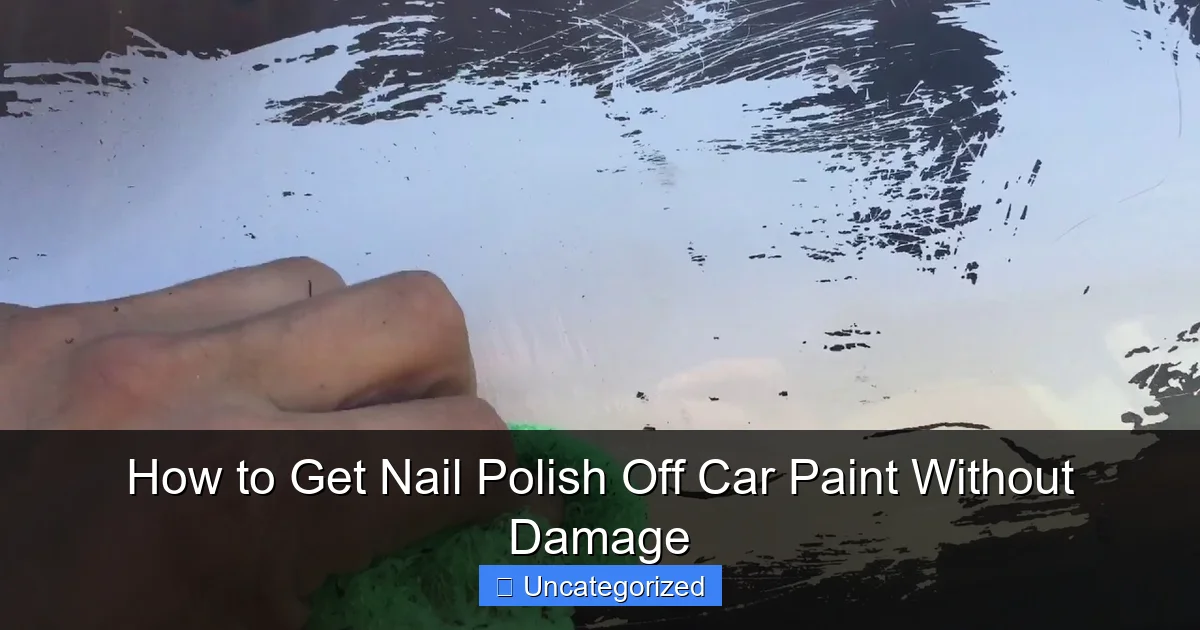
Visual guide about how to get nail polish off car paint
Image source: i.ytimg.com
It’s important to note that not all nail polishes are created equal. Gel polishes, for example, contain UV-cured polymers that bond more strongly to surfaces and require different removal techniques than traditional lacquer-based polishes. Similarly, glitter or textured polishes may embed particles into paint pores, making them harder to clean. Understanding the type of polish involved can help you choose the most effective and least invasive removal method.
How Car Paint Responds to Solvents
Automotive paint is typically a multi-layer system: a base coat (color), a clear coat (protective layer), and sometimes a primer underneath. The clear coat is designed to be resistant to UV rays, weather, and minor abrasions—but it’s not impervious to harsh solvents. Acetone, for instance, is a powerful solvent used in nail polish removers, but it can soften or strip the clear coat if used improperly. This is why using pure acetone directly on car paint is strongly discouraged.
Modern clear coats are more resilient than older finishes, but they can still be compromised by aggressive rubbing or prolonged exposure to solvents. The key to safe removal is using products that dissolve the polish without attacking the paint. Look for non-abrasive, non-acidic, and pH-neutral solutions that target the polish selectively. Additionally, the condition of your paint matters: a car with a well-maintained wax or ceramic coating will resist stains better than one with a dull, oxidized surface.
Immediate vs. Dried-On Stains
The timing of your response is critical. If you catch the nail polish spill within minutes, your job is significantly easier. Fresh polish is still liquid and hasn’t bonded chemically with the paint. In this case, gentle wiping with a solvent can lift it before it hardens. However, if the polish has dried—especially for 24 hours or more—it may have begun to cross-link with the clear coat, requiring more careful intervention.
- Fresh stains (under 1 hour): Use a fast-acting solvent like isopropyl alcohol or a commercial polish remover with caution.
- Partially dried (1–24 hours): Soften the polish with a solvent-soaked cloth before wiping.
- Fully cured (over 24 hours): May require soaking, light abrasion, or specialized detailing tools.
Essential Tools and Safe Solvents for Removal
Recommended Solvents (and Which to Avoid)
Not all solvents are safe for car paint. While acetone is the gold standard in nail salons, it’s too harsh for automotive use. Instead, opt for these paint-safe alternatives:
- Isopropyl alcohol (70% or higher): Milder than acetone, effective on fresh and semi-dried polish. Safe for clear coats when used sparingly.
- Rubbing alcohol with no additives: Ensure it’s 91% or 99% pure—avoid scented or colored versions.
- Non-acetone nail polish remover: Formulated for sensitive nails, these use ethyl acetate or propylene carbonate, which are gentler on paint.
- Automotive-grade detailing spray or quick detailer: Helps loosen polish without solvents; ideal for testing or light stains.
- Mineral spirits or odorless paint thinner: For tough, aged stains—use with extreme caution and only on small areas.
Never use: Pure acetone, gasoline, bleach, ammonia, or household cleaners like Windex, which contain solvents that degrade clear coats.
Tools and Supplies You’ll Need
Having the right tools prevents accidental damage. Here’s what to gather:
- Microfiber cloths (at least 3–4, lint-free)
- Cotton pads or soft cotton balls (for spot application)
- Plastic razor blades (for stubborn, cured polish)
- Clay bar (for embedded glitter or particles)
- Spray bottle (for solvent dilution and even application)
- Gloves (nitrile or latex to protect hands)
- Mask (if working in poorly ventilated areas)
- Bucket of soapy water and a separate rinse bucket (for cleaning tools)
Always use fresh microfiber cloths—reused or dirty ones can scratch the paint. Fold each cloth into quarters to expose clean surfaces as you work.
Creating a Safe Work Environment
Work in a shaded area to prevent solvents from evaporating too quickly, which can leave residue. Avoid direct sunlight, especially on hot days, as heat can cause solvents to dry faster and increase the risk of paint damage. Park your car on a level surface and clean the surrounding area with soapy water to remove dirt and debris. This prevents scratching when wiping.
Test any solvent on an inconspicuous area (like the inside of a wheel well) before applying it to the stained area. Apply a small amount, wait 30 seconds, then wipe. If there’s no discoloration or dulling, the product is safe to use.
Step-by-Step Removal Methods (From Mild to Aggressive)
Method 1: The Quick Wipe (For Fresh Spills)
If you catch the spill within minutes, this method is often sufficient:
- Blot the spill immediately with a dry microfiber cloth to absorb excess polish.
- Soak a cotton ball with 70% isopropyl alcohol or a non-acetone remover.
- Hold the cotton ball on the stain for 10–15 seconds to soften the polish.
- Gently wipe in one direction (not circular motions) using light pressure.
- Switch to a clean microfiber cloth to wipe away residue.
- Rinse the area with water and dry with a fresh cloth.
Pro Tip: If the polish is still wet, avoid rubbing—it can spread the stain. Instead, blot repeatedly with clean areas of the cloth.
Method 2: Soak and Lift (For Dried or Semi-Dried Polish)
When the polish has started to harden, a longer soak is needed:
- Cut a cotton pad to the size of the stain.
- Soak it with non-acetone remover or isopropyl alcohol.
- Place it directly on the stain and cover with plastic wrap (e.g., cling film) to prevent evaporation.
- Let it sit for 5–10 minutes (longer for thicker layers).
- Remove the plastic and gently wipe the area with a microfiber cloth.
- Repeat if necessary, then rinse and dry.
Example: A reader reported success with a 7-minute soak using 91% isopropyl alcohol on a 3-day-old red polish stain—no paint damage occurred.
Method 3: Plastic Razor Blade Technique (For Thick, Cured Layers)
For stubborn, fully cured polish (especially gel or glitter):
- Soak the area with isopropyl alcohol for 2–3 minutes.
- Hold a plastic razor blade at a 10–15 degree angle to the surface.
- Use light, straight strokes to shave off the polish layer by layer.
- Wipe frequently with a solvent-soaked cloth to keep the area lubricated.
- Once removed, clean with soapy water and apply a wax or sealant.
Warning: Never use a metal razor blade—it can scratch the paint. Keep the blade flat and move slowly to avoid gouging.
Method 4: Clay Bar Decontamination (For Embedded Particles)
If glitter or pigments remain after solvent use, a clay bar can lift them:
- Wash and dry the area thoroughly.
- Spray a clay lubricant (or diluted quick detailer) on the stain.
- Rub the clay bar back and forth over the area until smooth.
- Wipe with a microfiber cloth and inspect.
- Repeat if needed, then apply wax for protection.
This method is also useful for removing overspray or other embedded contaminants.
When to Escalate: Professional Detailing Options
If DIY methods fail or the stain covers a large area (e.g., a full panel), consider professional help. Detailers have access to:
- Low-aggression compounds for paint correction
- UV lamps for identifying residual polish
- High-quality sealants to restore gloss
Costs range from $50–$200 depending on severity, but it’s worth it to avoid costly paint repair.
Preventing Damage: Best Practices and Common Mistakes
Do’s and Don’ts of Nail Polish Removal
| Do | Don’t |
|---|---|
| Work in the shade | Use pure acetone or harsh chemicals |
| Test solvents first | Scrub with steel wool or abrasive pads |
| Use fresh microfiber cloths | Apply excessive pressure |
| Rinse and dry thoroughly | Leave solvents on the paint for too long |
| Follow up with wax or sealant | Use circular wiping motions |
Common Mistakes That Cause Damage
- Using paper towels: They’re abrasive and can scratch paint. Always use microfiber.
- Ignoring the clear coat: Some solvents weaken the clear coat, making it prone to hazing. Always re-wax after cleaning.
- Over-soaking: Leaving a solvent-soaked cloth for too long can seep into panel gaps and damage trim or rubber seals.
- Skipping rinsing: Residual solvent can attract dust or react with wax later.
Protecting Your Paint After Removal
Once the polish is gone, protect the area:
- Wash the entire panel with pH-neutral car shampoo.
- Apply a high-quality wax or ceramic coating to restore shine and UV protection.
- Inspect under different lighting to ensure no residue remains.
Regular maintenance—like hand washing and applying sealant every 3–6 months—makes future stain removal easier.
Preventing Future Nail Polish Accidents
Safe Nail Care Practices Around Vehicles
Prevention is the best cure. Follow these habits:
- Always manicure indoors or in a controlled space.
- Use a tray or mat to catch drips when applying polish.
- Keep polish bottles in a sealed container when transporting.
- Never store open polish near cars, especially in hot trunks or garages.
Emergency Kit for Accidents
Keep a small kit in your car:
- Travel-sized non-acetone remover
- Microfiber cloths
- Cotton pads
- Plastic razor blade
- Quick detailer spray
This allows you to address spills immediately, even on the go.
Alternative: Use Nail Polish Pens
Consider switching to nail polish pens (like those from Sally Hansen or OPI), which have precision tips and less risk of spills. They’re ideal for quick touch-ups and reduce the chance of accidental drips.
Conclusion
Removing nail polish from car paint doesn’t have to be a daunting task. With the right knowledge and tools, you can tackle even stubborn stains safely and effectively. The key is to act quickly, use paint-safe solvents like isopropyl alcohol or non-acetone removers, and avoid aggressive tools or techniques that could damage your vehicle’s finish. Whether you’re dealing with a fresh spill or a dried-on mess, the step-by-step methods outlined here—from gentle wiping to plastic razor blade scraping—provide a clear path to restoration.
Remember, prevention is just as important as treatment. By adopting safe nail care habits and keeping an emergency kit handy, you can minimize the risk of future accidents. And if all else fails, don’t hesitate to consult a professional detailer—your car’s paint is an investment worth protecting. With patience, care, and the right approach, you can keep your vehicle looking flawless, free from even the most stubborn nail polish stains. Now that you know how to get nail polish off car paint without damage, you can drive with confidence—no matter what life (or a dropped bottle) throws your way.
Frequently Asked Questions
How to get nail polish off car paint without causing scratches?
Use a non-acetone nail polish remover or isopropyl alcohol on a microfiber cloth, gently blotting (not rubbing) the stain. Follow with a car-safe wax or polish to restore shine and protect the paint.
Can I use regular nail polish remover on car paint?
Avoid acetone-based removers—they can strip wax and damage paint. Instead, opt for how to get nail polish off car paint solutions like isopropyl alcohol (70% or higher) or a dedicated automotive paint cleaner for safe removal.
What’s the safest method to remove dried nail polish from car paint?
Soak a cloth in warm, soapy water and lay it over the dried polish for 5 minutes to soften it. Then, gently wipe with a clay bar or use a plastic razor blade at a low angle to avoid scratches.
Will vinegar or baking soda remove nail polish from car paint?
Vinegar or baking soda may weaken the polish but aren’t reliable for full removal. For how to get nail polish off car paint, stick to isopropyl alcohol or a commercial paint-safe solvent for guaranteed results.
How do I prevent polish stains from setting into car paint?
Act quickly—blot fresh spills with a microfiber cloth, then use a quick detailer spray to lift residue. Avoid letting polish dry, as it bonds more tightly to paint over time.
Can I use a pressure washer to remove nail polish from my car?
No—high pressure can force polish deeper into paint or damage clear coat. Instead, use a gentle hand-washing technique with a pH-balanced car soap after treating the stain with a solvent.