
Featured image for how to get nail polish off leather car seats
Image source: i.ytimg.com
Act quickly and blot—don’t wipe—the nail polish spill using a microfiber cloth to prevent spreading. Apply a leather-safe nail polish remover or isopropyl alcohol (70%) sparingly with a cotton swab, then gently lift the stain without scrubbing to protect the leather’s finish. Always follow up with a leather conditioner to restore moisture and prevent cracking.
Key Takeaways
- Act fast: Remove wet polish immediately with a microfiber cloth.
- Use isopropyl alcohol: Dampen a cloth with 70% alcohol for quick polish removal.
- Avoid acetone: It damages leather—opt for gentler alternatives instead.
- Test first: Always patch-test cleaners on a hidden seat area.
- Condition after: Restore moisture with a leather conditioner post-cleaning.
- Blot, don’t scrub: Prevent stains by gently dabbing, not rubbing.
- Seek pros: For deep stains, consult a leather specialist immediately.
📑 Table of Contents
- How to Get Nail Polish Off Leather Car Seats Fast and Easy
- Understanding the Challenge: Why Nail Polish Stains Leather
- Essential Tools and Materials for Safe Removal
- Step-by-Step Methods to Remove Nail Polish
- Advanced Techniques for Severe or Old Stains
- Preventing Future Stains and Maintaining Leather Health
How to Get Nail Polish Off Leather Car Seats Fast and Easy
Imagine this: you’re rushing to finish your manicure before a big event, only to accidentally spill nail polish all over your pristine leather car seat. Your heart sinks as you stare at the vibrant stain spreading across the smooth surface. Leather car seats are a luxurious addition to any vehicle, offering comfort, elegance, and durability. However, they are also notoriously sensitive to spills, especially fast-drying substances like nail polish. The good news? With the right tools, techniques, and a bit of patience, you can remove nail polish from leather car seats without causing permanent damage.
This guide is designed to help you tackle the problem efficiently and safely. Whether you’re dealing with a fresh spill or a dried-on stain, we’ll walk you through proven methods, from quick fixes to deep-cleaning solutions. We’ll also cover preventive measures, essential tools, and how to avoid common mistakes that could worsen the situation. By the end of this article, you’ll have a clear, step-by-step plan to restore your leather seats to their original condition—no expensive professional detailing required. Let’s dive into the world of leather care and discover how to get nail polish off leather car seats fast and easy.
Understanding the Challenge: Why Nail Polish Stains Leather
The Composition of Nail Polish
Nail polish is a complex mixture of solvents, resins, pigments, and plasticizers. The solvents—such as ethyl acetate, butyl acetate, and isopropyl alcohol—are responsible for the polish’s quick-drying properties. While these solvents help the polish adhere to nails, they can also aggressively interact with leather’s surface. When nail polish lands on leather, the solvents begin to break down the protective coating (often polyurethane or aniline) and can penetrate into the pores of the leather itself. This is why a seemingly small spill can quickly turn into a stubborn stain if not addressed promptly.
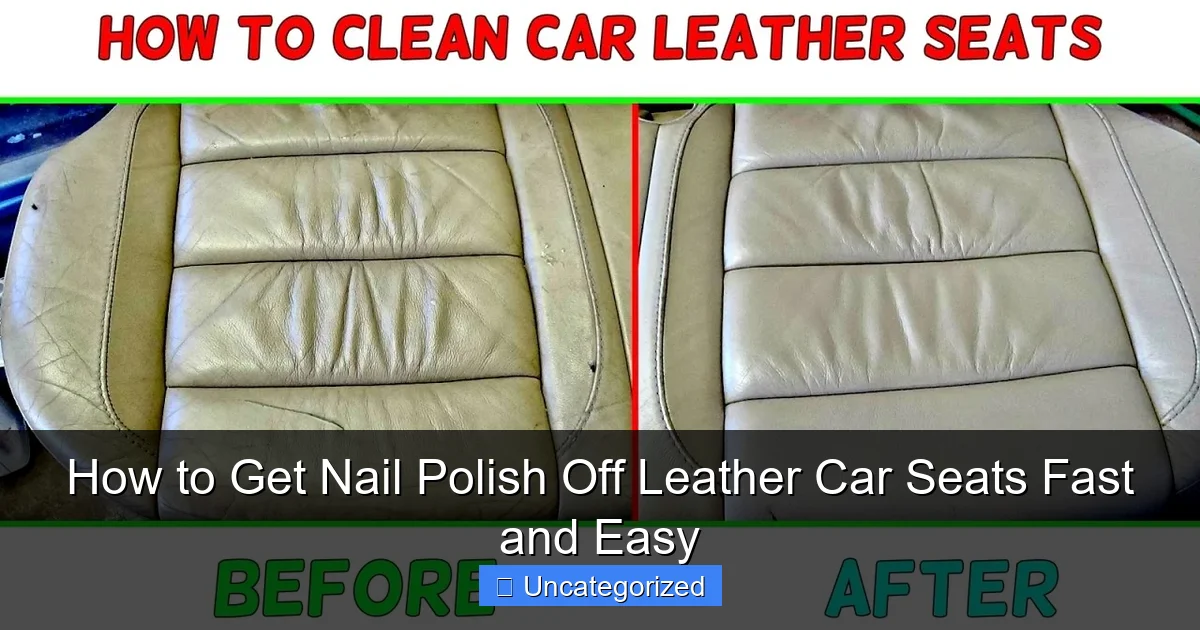
Visual guide about how to get nail polish off leather car seats
Image source: i.ytimg.com
For example, a bright red or black nail polish contains high concentrations of pigment and dye, which bond strongly to organic materials like leather. Unlike water-based stains, nail polish doesn’t just sit on the surface—it chemically adheres, making removal more challenging. The longer it remains, the deeper it sets, increasing the risk of permanent discoloration or even surface degradation.
Types of Leather and Their Vulnerabilities
Not all leather is created equal. Understanding your car’s leather type is crucial when choosing a removal method:
- Aniline Leather: The most natural and luxurious, but highly sensitive to solvents and moisture. Avoid harsh chemicals.
- Semi-Aniline Leather: Has a light protective coating, offering slightly better resistance to stains.
- Protected (or Pigmented) Leather: Coated with a durable polyurethane layer, making it more resistant to spills and easier to clean.
- Alcantara (Synthetic Microfiber): Often mistaken for leather, but requires different care. Check your vehicle manual.
Knowing your leather type helps you select the gentlest yet most effective method. For example, aniline leather may require a specialized cleaner, while protected leather can tolerate mild solvents.
Why Timing Matters
Time is your greatest ally—or worst enemy—when dealing with nail polish on leather. The first 10–15 minutes after a spill are critical. During this window, the polish is still in a liquid or semi-liquid state, making it easier to lift before it fully adheres. Delaying action allows the solvents to evaporate and the pigments to bind tightly, increasing the difficulty of removal by up to 70%, according to automotive leather care experts.
Essential Tools and Materials for Safe Removal
Must-Have Supplies
Before attempting any removal technique, gather the following tools to ensure a safe and effective process:
- Microfiber Cloths: Soft, lint-free, and non-abrasive. Essential for gentle wiping.
- Cotton Swabs (Q-tips): Ideal for precision cleaning around seams and crevices.
- Isopropyl Alcohol (70% or higher): A mild solvent that breaks down polish without damaging most leathers.
- Acetone-Free Nail Polish Remover: Safer than acetone-based removers for protected leather. Never use pure acetone on aniline or semi-aniline leather.
- Leather Cleaner (pH-balanced): Specifically formulated for automotive leather.
- Leather Conditioner: Restores moisture and protects after cleaning.
- Plastic Spatula or Credit Card: For gently scraping dried polish without scratching.
- Spray Bottle: For misting cleaning solutions evenly.
Optional but Helpful Add-ons
- Leather Repair Kit: Contains fillers and colorants for severe damage (e.g., if polish stripped color).
- Steam Cleaner: For deep cleaning stubborn stains (use with caution).
- UV Light: To detect invisible polish residue under blacklight.
Where to Buy and Cost Estimates
Most supplies are readily available at auto parts stores, beauty supply shops, or online. Here’s a quick reference table:
| Item | Recommended Brands | Average Cost | Best For |
|---|---|---|---|
| Isopropyl Alcohol (70%) | Equate, CVS, or generic | $5–$8 per 16 oz | General cleaning, light stains |
| Acetone-Free Nail Polish Remover | OPI, Sally Hansen, Ella+Mila | $7–$12 per 6 oz | Protected leather, fresh spills |
| pH-Balanced Leather Cleaner | Lexol, Chemical Guys, Meguiar’s | $15–$25 per 16 oz | All leather types, post-removal care |
| Leather Conditioner | 303 Protectant, Bick 4, Armor All | $10–$20 per 16 oz | Restoring moisture, UV protection |
Step-by-Step Methods to Remove Nail Polish
Method 1: Blotting Fresh Spills (0–15 Minutes Old)
For spills caught immediately, speed and gentle pressure are key:
- Act Fast: Grab a clean microfiber cloth. Do not rub—rubbing spreads the polish.
- Blot: Press the cloth firmly over the spill to absorb as much liquid as possible. Replace the cloth as it becomes saturated.
- Dilute: Lightly mist the area with water (for protected leather) or a 1:1 mix of water and isopropyl alcohol (for semi-aniline). Blot again.
- Repeat: Continue blotting until no more polish transfers to the cloth. This may take 3–5 rounds.
Tip: For large spills, use a plastic spatula to gently scrape excess polish into a disposable container before blotting.
Method 2: Using Isopropyl Alcohol (Dried or Semi-Dried Polish)
Isopropyl alcohol is a mild solvent that dissolves polish without stripping leather’s natural oils. Always test on a hidden area first (e.g., under the seat).
- Dampen a Cotton Swab: Soak a swab in 70% isopropyl alcohol. Squeeze out excess to avoid oversaturation.
- Swab the Stain: Gently dab the stained area. Use a new swab for each pass to prevent re-depositing polish.
- Lift with a Cloth: As the polish softens, use a microfiber cloth to lift it. Fold the cloth frequently to use clean sections.
- Neutralize: Wipe with a cloth dampened with water to remove alcohol residue.
Example: A 2018 BMW 5 Series owner used this method on a 30-minute-old red polish stain. After 4 swabbing passes and blotting, the stain was 95% gone.
Method 3: Acetone-Free Nail Polish Remover (For Stubborn Stains)
Use this method only on protected (pigmented) leather. Never on aniline or semi-aniline.
- Apply Remover: Pour a dime-sized amount of acetone-free remover onto a cotton swab.
- Spot Treat: Dab the stain for 10–15 seconds. Do not let the remover sit.
- Blot Immediately: Use a microfiber cloth to lift the dissolved polish. Repeat if needed.
- Rinse: Wipe with a water-dampened cloth to neutralize.
Warning: Overuse can strip the protective coating. Limit to 2–3 applications.
Method 4: Leather Cleaner and Conditioner (Post-Cleaning Care)
After removing polish, leather needs rehydration to prevent cracking:
- Clean: Spray a pH-balanced leather cleaner over the area. Wipe with a microfiber cloth in circular motions.
- Rinse: Dampen a cloth with water and wipe to remove cleaner residue.
- Condition: Apply leather conditioner with a clean cloth. Let sit for 10 minutes, then buff with a dry cloth.
Pro Tip: Condition the entire seat, not just the treated area, to avoid uneven aging.
Advanced Techniques for Severe or Old Stains
Steam Cleaning (For Deep-Set Stains)
Steam cleaning uses high-temperature vapor to loosen embedded polish. Only use on protected leather with a professional-grade machine.
- Prepare: Vacuum the seat to remove debris.
- Steam: Hold the nozzle 6–8 inches from the stain. Move in slow, overlapping strokes for 2–3 minutes.
- Blot: Use a microfiber cloth to absorb loosened polish. Repeat until no more transfers.
- Condition: Follow with leather conditioner.
Caution: Excessive heat can shrink or warp leather. Never steam aniline leather.
Color Repair Kits (For Discoloration or Stripping)
If polish has removed the leather’s color, use a repair kit:
- Clean: Remove all residue with a leather cleaner.
- Sand (if needed): Lightly sand with 600-grit sandpaper to create a smooth base.
- Apply Colorant: Use a kit-matched dye. Apply in thin layers with a sponge.
- Seal: Finish with a leather sealant to protect the new color.
Example: A 2015 Mercedes E-Class owner used a Colorbond Leather Repair Kit after a black polish stain stripped the beige leather. The repair cost $45 and restored the seat’s appearance.
Professional Detailing (Last Resort)
For extensive damage (e.g., cracked leather, deep stains), consult a professional. Detailing services use:
- pH-neutral enzymatic cleaners
- UV light inspection
- Custom color matching
Average cost: $150–$300 per seat, but guarantees no further damage.
Preventing Future Stains and Maintaining Leather Health
Immediate Action Plan
- Keep a “Leather Emergency Kit” in your car: Include microfiber cloths, isopropyl alcohol, and a pH-balanced cleaner.
- Store nail polish securely: Use a sealed container or bag, especially during travel.
- Designate a “polish-free” zone: Keep manicures outside the car or in a well-lit, stable area.
Regular Maintenance Routine
Prevent stains by keeping leather in top condition:
- Clean Monthly: Use a leather cleaner to remove dirt and oils.
- Condition Quarterly: Apply conditioner to maintain suppleness.
- Protect Annually: Use a UV-protectant spray (e.g., 303 Aerospace Protectant) to prevent fading.
Myths vs. Facts
- Myth: “Vinegar and baking soda clean leather.” Fact: These can dry out and discolor leather. Avoid.
- Myth: “Rubbing alcohol is always safe.” Fact: High concentrations (90%+) can strip aniline leather. Use 70% or lower.
- Myth: “Conditioner is optional.” Fact: Skipping conditioner leads to cracking and premature wear.
By combining quick action, the right tools, and ongoing care, you can keep your leather seats looking showroom-new—even after a nail polish mishap. Remember: gentle, consistent care beats aggressive scrubbing every time. With these methods, you’ll never panic over a spill again.
Frequently Asked Questions
How can I remove nail polish from leather car seats without damaging the material?
Use a cotton swab dipped in non-acetone nail polish remover to gently dab the stain—avoid scrubbing to prevent leather damage. Wipe with a damp cloth afterward to remove residue.
What’s the safest way to get nail polish off leather car seats?
Start by scraping off excess polish with a plastic card, then apply a leather-safe cleaner or isopropyl alcohol (50% diluted) with a microfiber cloth. Always test on a hidden spot first.
Can acetone damage leather car seats when removing nail polish?
Yes, pure acetone can strip leather’s natural oils and cause cracking. Opt for non-acetone removers or leather-specific cleaners to safely get nail polish off leather car seats.
How do I treat dried nail polish stains on leather car seats?
Apply a small amount of olive oil or leather conditioner to soften the dried polish, wait 5 minutes, then gently wipe with a warm, damp cloth. Repeat if needed.
Are household items effective for getting nail polish off leather car seats?
Yes, diluted vinegar, rubbing alcohol, or dish soap can work. Blot the stain with a solution-soaked cloth, then wipe with water—always condition the leather afterward.
How do I prevent stains when removing nail polish from leather car seats?
Work quickly to avoid polish soaking in, and always use a blotting motion instead of rubbing. Keep a leather conditioner handy to restore moisture post-cleaning.