
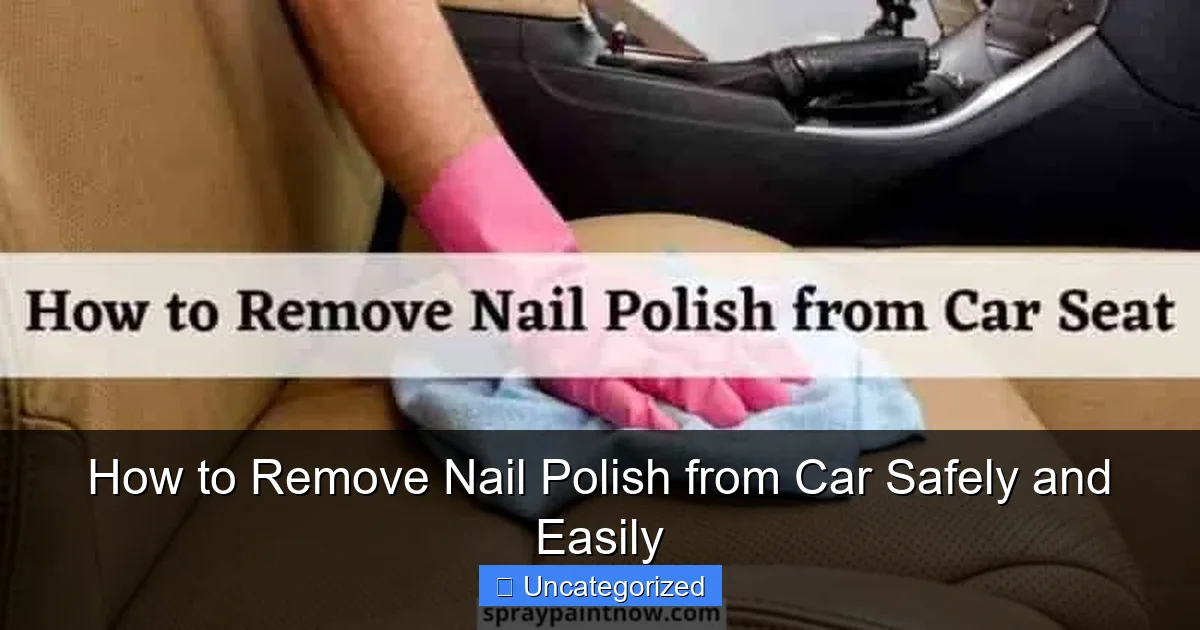
Featured image for how to remove nail polish from car
Image source: spraypaintnow.com
Act quickly to prevent nail polish from bonding to your car’s surface—fresh spills are far easier to remove. Use a non-acetone nail polish remover or isopropyl alcohol with a microfiber cloth to gently lift the stain without damaging paint or trim. Avoid harsh scrubbing, and always test the solution on a small area first for safety.
Key Takeaways
- Act fast: Remove spills immediately to prevent staining.
- Use acetone-free remover: Safer for car paint and surfaces.
- Test first: Always patch-test on a hidden area.
- Blot, don’t rub: Lift polish gently with a soft cloth.
- Protect afterward: Apply wax or sealant to safeguard paint.
📑 Table of Contents
- How to Remove Nail Polish from Car Safely and Easily
- Understanding Nail Polish and Why It’s Challenging to Remove
- Immediate Actions: What to Do When Nail Polish Spills on Your Car
- Safe and Effective Methods to Remove Nail Polish from Car Paint
- Removing Nail Polish from Other Car Surfaces
- Prevention and Long-Term Protection
- Conclusion
How to Remove Nail Polish from Car Safely and Easily
Few things are as frustrating as discovering a splash of nail polish on your car’s pristine paintwork. Whether it’s from an accidental spill during a quick touch-up or a playful child with a newfound love for manicures, nail polish can be a nightmare for car owners. Unlike water-based stains, nail polish is a solvent-based lacquer that bonds quickly to surfaces, making it notoriously difficult to remove without damaging the vehicle’s finish. The good news? With the right approach, tools, and a bit of patience, you can safely and effectively eliminate nail polish from your car—without leaving behind scratches, swirls, or chemical damage.
This comprehensive guide walks you through everything you need to know about how to remove nail polish from car surfaces, including paint, glass, plastic trim, and upholstery. We’ll cover immediate actions, recommended products, step-by-step techniques, and preventive tips to ensure your car stays spotless and protected. Whether you’re dealing with a fresh spill or a dried-on stain, this article provides practical, science-backed solutions to restore your vehicle’s appearance. By the end, you’ll not only know how to tackle the problem but also understand why certain methods work and which ones to avoid at all costs.
Understanding Nail Polish and Why It’s Challenging to Remove
Before diving into removal techniques, it’s essential to understand what makes nail polish such a stubborn contaminant. Nail polish is a complex mixture of film-forming polymers (like nitrocellulose), plasticizers (to prevent cracking), solvents (such as butyl acetate and ethyl acetate), and pigments. When applied, the solvents evaporate, leaving behind a hard, glossy film that adheres tightly to surfaces. On a car, this film bonds with the clear coat and paint layers, making mechanical or water-based cleaning ineffective.
Visual guide about how to remove nail polish from car
Image source: i.ytimg.com
Why Nail Polish Damages Car Paint
The solvents in nail polish are designed to dissolve the polish itself, but they can also interact with automotive clear coats—especially if left untreated. Prolonged exposure may lead to:
- Surface etching: The solvents can soften or degrade the clear coat, especially on older or oxidized paint.
- Staining: Pigments can embed into microscopic scratches or porous surfaces, making removal harder over time.
- Adhesion issues: The polish film can create a barrier that prevents proper waxing or sealing later.
Additionally, using the wrong removal method—such as aggressive scrubbing or acetone-based products not formulated for automotive use—can worsen the damage. That’s why understanding the chemistry and acting quickly is crucial.
Types of Nail Polish Stains on Cars
Not all nail polish stains are created equal. The removal strategy depends on:
- Fresh vs. Dried: Fresh spills are easier to lift before the solvents evaporate. Dried polish requires more effort and possibly chemical intervention.
- Surface type: Paint, glass, plastic trim, rubber seals, and fabric upholstery all react differently to cleaning agents.
- Color intensity: Bright reds, neons, and dark polishes contain more concentrated pigments and may require additional treatment.
For example, a small drop of clear polish on glass is far less problematic than a splatter of black polish on black paint. Identifying the stain type helps you choose the safest and most effective removal method.
Immediate Actions: What to Do When Nail Polish Spills on Your Car
Time is of the essence when dealing with nail polish on your car. The longer it sits, the more it bonds and the harder it becomes to remove. Here’s what to do right away to minimize damage:
Step 1: Blot, Don’t Rub
As soon as you notice the spill, grab a clean microfiber cloth or paper towel. Do not rub or scrub—this spreads the polish and pushes it deeper into paint pores. Instead, gently blot the area to absorb as much liquid as possible. If the spill is large, use multiple cloths to avoid reapplying the polish.
Pro Tip: Keep a small microfiber cloth in your car’s glove compartment for emergencies like this.
Step 2: Isolate the Area
If the polish is on a non-porous surface like glass or plastic, cover the surrounding area with painter’s tape or aluminum foil to protect it during cleaning. For paint, avoid touching adjacent areas to prevent cross-contamination.
Step 3: Use a Pre-Cleaning Solvent (Optional)
For fresh spills on paint, a non-abrasive solvent wipe can help lift the polish before it hardens. Products like Isopropyl Alcohol (70% or higher) or Automotive Quick Detailer can break down solvents without harming the clear coat. Spray a small amount on a microfiber towel and gently dab the stain.
- Why it works: Isopropyl alcohol evaporates quickly and has mild solvent properties that loosen fresh polish.
- Caution: Do not use acetone or nail polish remover at this stage—it may damage the paint.
Step 4: Assess and Prepare for Removal
After blotting, assess the stain:
- If the polish is still wet, you may be able to lift most of it with a cotton pad soaked in isopropyl alcohol.
- If it’s starting to dry, proceed to the next section for targeted removal methods.
- If it’s on fabric or carpet, avoid water-based cleaners and opt for solvent-safe upholstery treatments.
Example: A reader shared that her daughter spilled red nail polish on her white SUV’s hood while doing her nails in the garage. She immediately blotted with a paper towel, then used a 70% isopropyl wipe. Within 10 minutes, 90% of the stain was gone, and the rest was removed with a clay bar—no permanent damage.
Safe and Effective Methods to Remove Nail Polish from Car Paint
For dried or stubborn nail polish on car paint, a combination of chemical and mechanical methods is often required. The goal is to dissolve the polish without harming the underlying clear coat or base paint. Here are the top techniques, ranked by safety and effectiveness:
Method 1: Clay Bar Treatment (Best for Light Stains)
A detailing clay bar is a soft, pliable resin that lifts embedded contaminants from the paint surface. It’s ideal for small, dried polish spots that haven’t deeply bonded.
- Wash and dry the car thoroughly.
- Spray a clay lubricant (or quick detailer) on the affected area.
- Glide the clay bar back and forth over the stain using light pressure. The polish will stick to the clay.
- Fold the clay frequently to expose a clean surface.
- Wipe with a microfiber towel and inspect. Repeat if necessary.
Pros: Safe, non-chemical, preserves wax/sealant.
Cons: Less effective on thick or deeply bonded polish.
Method 2: Solvent-Based Paint Cleaner (For Moderate Stains)
Automotive paint cleaners (e.g., Meguiar’s Ultimate Compound, Sonax Perfect Finish) contain mild solvents and abrasives that dissolve polish while polishing the paint.
- Apply a small amount to a foam applicator pad.
- Work in 2×2 ft sections, using moderate pressure in overlapping passes.
- Wipe with a microfiber towel. Check for residue.
- Follow with a wax or sealant to restore protection.
Tip: Use a dual-action polisher for larger areas to reduce hand fatigue and ensure even results.
Method 3: Isopropyl Alcohol + Microfiber (For Fresh or Light Stains)
For small, fresh spills or light residue, 70–90% isopropyl alcohol is a safe, readily available option.
- Dampen a microfiber towel (not dripping) with alcohol.
- Gently dab or wipe the stain in one direction.
- Change towels frequently to avoid spreading polish.
- Rinse the area with water and dry immediately.
Warning: Do not use on matte finishes or vinyl wraps—alcohol can discolor or damage them.
Method 4: Acetone with Extreme Caution (Last Resort)
Acetone is a powerful solvent found in most nail polish removers. While effective, it’s highly aggressive and can strip wax, damage clear coats, or discolor plastics.
- Only use 100% acetone (no oils or moisturizers).
- Test on an inconspicuous area first (e.g., inside the fuel door).
- Apply with a cotton swab or microfiber pad using minimal pressure.
- Wipe immediately with water and dry. Follow with a paint sealant.
Example: A mechanic in Austin removed a large black polish stain from a customer’s hood using a cotton swab dipped in acetone. He worked in 1-inch sections, wiped each with water, and applied a ceramic coating afterward. The paint was restored with no etching.
Removing Nail Polish from Other Car Surfaces
Nail polish doesn’t just affect paint—it can splash onto glass, plastic trim, rubber seals, and upholstery. Each surface requires a tailored approach to avoid damage.
Glass and Windows
Glass is non-porous and highly resistant to solvents, making it the easiest surface to clean.
- Use a glass cleaner with ammonia (e.g., Windex) and a microfiber towel.
- For stubborn stains, apply a small amount of isopropyl alcohol or 100% acetone with a cotton pad.
- Wipe with a dry, lint-free cloth.
Pro Tip: A razor blade (held at a 45° angle) can safely scrape dried polish from glass—never use on paint.
Plastic Trim and Rubber Seals
Plastic trim (e.g., door moldings, bumpers) can become brittle or discolored from solvents. Use a trim-safe cleaner like Meguiar’s Ultimate Black or Chemical Guys VRP.
- Dampen a cloth with the cleaner and gently rub the stain.
- For deep-set polish, use a soft-bristle brush.
- Rinse with water and dry. Apply a UV protectant to prevent fading.
Caution: Avoid acetone or alcohol on unpainted plastic—it can cause cracking.
Fabric Upholstery and Carpets
For cloth seats or floor mats, time is critical before the polish sets.
- Blot with a dry cloth to absorb excess.
- Apply a fabric-safe solvent like Goof Off Fabric Cleaner or OxiClean Versatile Stain Remover.
- Blot with a damp cloth, then vacuum.
Alternative: For leather seats, use a leather-safe nail polish remover (e.g., Zep Professional) or consult a detailer.
Metal Trim and Chrome
Chrome and polished metal are durable but can oxidize if solvents linger.
- Use isopropyl alcohol or a chrome polish (e.g., Mothers California Gold).
- Buff with a microfiber cloth.
- Seal with a metal protectant.
Prevention and Long-Term Protection
Once you’ve removed the nail polish, take steps to prevent future stains and protect your car’s surfaces.
Create a “Nail Polish-Free Zone”
Designate a specific area (e.g., bathroom, vanity) for manicures. Never do nails in the garage or near the car. Keep polish bottles in a closed container.
Use Protective Coatings
Apply a ceramic coating or paint sealant to your car’s paint. These create a hydrophobic, chemical-resistant barrier that makes stains easier to wipe off. For example, a ceramic-coated hood can repel fresh polish, allowing you to clean it with just water and a microfiber towel.
Keep an Emergency Kit
Assemble a small kit with:
- Microfiber towels
- Isopropyl alcohol (70%)
- Clay bar and lubricant
- Quick detailer
- Cotton pads
Store it in your trunk for quick access.
Regular Detailing Routine
Wash your car weekly, inspect for contaminants, and apply wax monthly. Regular maintenance makes spot removal easier and prevents polish from bonding deeply.
Data Table: Recommended Products for Nail Polish Removal
| Surface | Product | Type | Key Benefit | Price Range |
|---|---|---|---|---|
| Paint (light stain) | Mothers Clay Bar Kit | Mechanical | Non-abrasive, safe for clear coat | $15–$25 |
| Paint (moderate) | Meguiar’s Ultimate Compound | Chemical/Mechanical | Dissolves polish + polishes paint | $20–$30 |
| Glass | Windex Ammonia-Free | Solvent | Streak-free, safe for tinted glass | $5–$10 |
| Plastic Trim | Chemical Guys VRP | Solvent | UV protection, no cracking | $12–$18 |
| Fabric | Goof Off Fabric Cleaner | Solvent | Removes tough stains, dries fast | $8–$12 |
| Emergency | 70% Isopropyl Alcohol | Solvent | Readily available, low cost | $3–$7 |
Conclusion
Removing nail polish from your car doesn’t have to be a stressful, damaging ordeal. By acting quickly, understanding the chemistry of the stain, and using the right tools and techniques, you can restore your vehicle’s appearance safely and effectively. Whether you’re tackling a fresh spill with a microfiber cloth and isopropyl alcohol or using a clay bar for dried residue, the key is to match the method to the surface and severity.
Remember: Prevention is the best cure. Create boundaries for nail polish use, maintain a protective coating on your paint, and keep an emergency cleaning kit on hand. With this guide, you’re now equipped with the knowledge to handle nail polish mishaps with confidence. From glass to upholstery, every surface has a solution—and with patience and care, your car can stay as flawless as the day you bought it.
Next time you spot a splash of red or glitter on your hood, don’t panic. Take a deep breath, follow the steps outlined here, and get back to enjoying your ride—polish-free and proud.
Frequently Asked Questions
How to remove nail polish from car without damaging the paint?
Use a gentle nail polish remover with acetone or non-acetone formulas, applied with a microfiber cloth to avoid scratching. Always test on a small, hidden area first to ensure paint safety.
What household products can I use to remove nail polish from car surfaces?
Rubbing alcohol, hand sanitizer, or vinegar can effectively dissolve nail polish. Apply with a soft cloth, let sit for 30 seconds, then wipe gently to avoid abrasion.
Can I use nail polish remover on car interior or leather seats?
For car interiors, use a non-acetone remover or diluted isopropyl alcohol to prevent cracking or discoloration. Blot the stain instead of scrubbing to protect delicate materials.
How to remove dried nail polish from car paint safely?
Soak a cloth in warm, soapy water to soften the polish, then use a plastic scraper to lift it gently. Finish with a mild polish or clay bar for residue-free results.
Does WD-40 help in removing nail polish from car surfaces?
Yes, WD-40 can break down nail polish—spray lightly, wait 10 seconds, then wipe with a clean cloth. Rinse thoroughly afterward to avoid leaving an oily residue.
How to prevent damage when removing nail polish from car headlights?
Use a specialized plastic-safe polish remover or isopropyl alcohol, and avoid abrasive tools. Always follow up with a plastic protectant to maintain headlight clarity.