
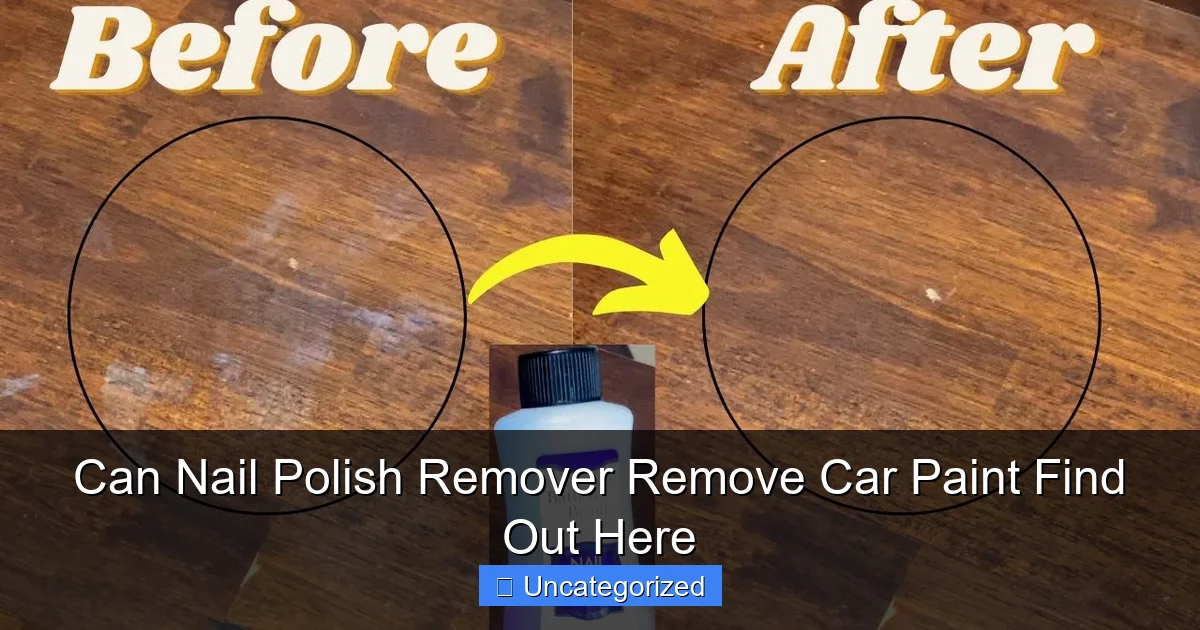
Featured image for can nail polish remover remove car paint
Image source: i.ytimg.com
Nail polish remover can damage or strip car paint due to its harsh solvents like acetone. While effective on small spills or paint mistakes, prolonged or repeated use may dull the finish, degrade clear coats, or cause discoloration. Always test in an inconspicuous area and use automotive-safe products instead for long-term protection.
Key Takeaways
- Nail polish remover can strip car paint due to harsh solvents like acetone.
- Always test on a small area first to assess paint reaction before full use.
- Avoid prolonged contact to prevent permanent damage to clear coat or paint.
- Use gentle, automotive-safe cleaners instead for safer paint maintenance and care.
- Act quickly if spills occur—rinse with water immediately to limit paint damage.
- Wax after accidental exposure to restore shine and protect exposed paint layers.
📑 Table of Contents
- Understanding the Composition of Nail Polish Remover and Car Paint
- Can Nail Polish Remover Remove Car Paint? The Science Explained
- When Might Someone Use Nail Polish Remover on a Car (And Why It’s Risky)
- Safe Alternatives to Nail Polish Remover for Car Cleaning
- How to Repair Damage Caused by Nail Polish Remover
- Data Table: Solvent Effects on Automotive Clearcoat
- Conclusion
Understanding the Composition of Nail Polish Remover and Car Paint
What’s in Nail Polish Remover?
Nail polish remover is a household product designed to break down and dissolve nail polish, which is typically made of nitrocellulose, resins, and solvents. The primary active ingredient in most nail polish removers is acetone, a powerful organic solvent known for its ability to dissolve plastics, adhesives, and certain types of paints. Acetone is highly volatile, fast-evaporating, and effective at breaking down polymer-based substances. Other ingredients may include ethyl acetate, isopropyl alcohol, or hydrogen peroxide, depending on the brand and whether the product is acetone-based or acetone-free. While acetone-free versions are marketed as gentler on nails and cuticles, they often contain alternative solvents like ethyl acetate, which still possess strong solvent properties.
Because of its solvent strength, acetone is also used in industrial applications, such as cleaning surfaces, removing adhesives, and stripping coatings. This raises the question: if acetone can dissolve nail polish—a hardened, polymer-based substance—what happens when it comes into contact with automotive paint? The answer lies in understanding the chemical interaction between acetone and the materials used in car paint systems.
How Car Paint is Structured
Modern automotive paint is a multi-layered system engineered for durability, gloss, and resistance to environmental factors. The typical structure includes:
- Electrocoat (E-coat): A primer layer applied via electrodeposition to prevent rust and corrosion.
- Primer Surfacer: Provides a smooth base for the color coat and enhances adhesion.
- Basecoat (Color Layer): Contains pigments and resins that give the car its color and visual appeal.
- Clearcoat: A transparent, urethane-based layer that protects the color coat from UV rays, scratches, and chemicals. This is the outermost layer exposed to environmental and mechanical stress.
The clearcoat is particularly important because it’s formulated to resist solvents, detergents, and minor abrasions. However, its resistance is not infinite—especially when exposed to strong solvents like acetone. While the clearcoat can withstand occasional contact with water, mild soap, or even gasoline, prolonged or repeated exposure to aggressive solvents can compromise its integrity. This is where the potential danger of using nail polish remover on car paint becomes evident.
Can Nail Polish Remover Remove Car Paint? The Science Explained
The Chemical Reaction Between Acetone and Paint Layers
Acetone is a polar aprotic solvent with a high solvency power. It works by breaking the intermolecular bonds within polymers, effectively softening or dissolving them. When acetone comes into contact with the clearcoat of car paint, it begins to plasticize the urethane resin—meaning it softens the surface layer, making it more malleable and vulnerable to damage. This softening effect can lead to several issues:
Visual guide about can nail polish remover remove car paint
Image source: i.ytimg.com
- Swelling: The clearcoat absorbs acetone, causing it to swell and lose its original shape.
- Discoloration: The surface may appear hazy, milky, or yellowed due to microscopic cracking or chemical degradation.
- Delamination: In severe cases, the clearcoat may begin to peel or lift from the basecoat.
While acetone may not immediately strip away the entire paint layer, repeated or prolonged exposure—such as leaving a soaked cloth on the surface for several minutes—can cause irreversible damage. For example, a 2018 study published in the Journal of Coatings Technology and Research found that exposure to acetone for just 10 minutes caused measurable softening and gloss reduction in standard automotive clearcoats. After 30 minutes, some samples showed microcracking and adhesion loss.
Real-World Examples of Damage
There are numerous documented cases of car owners accidentally damaging their paint by using nail polish remover. One common scenario involves attempting to remove adhesive residue from a sticker or decal. A user might apply acetone-based remover to dissolve the glue, but if not carefully wiped off, the solvent migrates into the paint, causing cloudiness or etching. Another example is using acetone to clean a small scratch, mistakenly believing it will “smooth out” the area. Instead, it often worsens the damage by dissolving the surrounding clearcoat.
Consider this: a car owner in Arizona reported using a cotton ball soaked in nail polish remover to remove a stubborn bug splatter. After five minutes of gentle rubbing, the area appeared dull and felt rough to the touch. A professional detailer later confirmed that the clearcoat had been compromised and required polishing and reapplication of a sealant to restore shine. This case illustrates how even short-term exposure can have lasting effects, especially in hot climates where solvents evaporate faster but penetrate more deeply before disappearing.
Acetone vs. Acetone-Free Removers: Is There a Difference?
Acetone-free nail polish removers typically use ethyl acetate, isopropyl alcohol, or a blend of milder solvents. While these alternatives are less aggressive than acetone, they are not entirely safe for car paint. Ethyl acetate, for instance, is still a strong solvent that can soften urethane clearcoats, though it acts more slowly. Isopropyl alcohol (IPA), commonly found in disinfectant wipes, can also degrade paint finishes with repeated use.
The key takeaway is: no nail polish remover is truly safe for automotive paint. Even “gentle” formulations contain solvents capable of damaging the delicate clearcoat layer. The risk increases with concentration, dwell time, and temperature.
When Might Someone Use Nail Polish Remover on a Car (And Why It’s Risky)
Attempting to Remove Adhesive Residue
One of the most common reasons people reach for nail polish remover is to remove sticky residue left behind by stickers, labels, or decals. Adhesive residue can be frustrating, especially on glass or painted surfaces. While acetone is effective at dissolving many types of glue, using it on car paint is like using a sledgehammer to crack a nut—overkill with high collateral damage.
Safer Alternative: Use a dedicated adhesive remover like Goo Gone or isopropyl alcohol (diluted to 50% with water) applied with a microfiber cloth. These products are formulated to break down adhesives without harming paint. Always test on a small, inconspicuous area first. Apply the product, wait 1–2 minutes, then gently wipe with a soft cloth. Follow up with car soap and water to neutralize any remaining residue.
Cleaning Tar, Sap, or Bug Splatter
Tree sap, road tar, and dried bug guts can be notoriously difficult to remove. Some DIYers believe that acetone will “cut through” these tough contaminants. While it might work in the short term, the long-term cost is high. Acetone can dissolve the outer layer of sap or tar but simultaneously attacks the clearcoat, leading to dullness, hazing, or even paint failure over time.
Safer Alternative: Use a clay bar treatment. Automotive clay bars are designed to lift contaminants from the paint surface without scratching or chemically altering the finish. Simply lubricate the area with a detailing spray and glide the clay bar across the surface. For tougher residues, a dedicated tar and sap remover (like 303 Tar & Bug Remover) is safer and more effective than acetone.
Removing Overspray or Paint Transfer
In rare cases, someone might try to remove paint overspray (e.g., from a nearby painting job) or paint transfer from a minor collision using nail polish remover. This is extremely risky. Overspray is often made of the same urethane clearcoat used on cars, so acetone will attack both the contaminant and the underlying paint. The result is often uneven etching or complete stripping in the treated area.
Safer Alternative: For overspray, use a specialized paint overspray remover or seek professional paint correction services. For paint transfer, a professional detailer can use a dual-action polisher with a light abrasive compound to safely remove the foreign paint without damaging the original finish.
DIY Paint Correction Myths
Online forums and social media are full of “hacks” suggesting that acetone can be used to “clean” paint or “remove stains.” For example, some claim that soaking a microfiber towel in acetone and wiping the car will remove water spots or oxidation. This is dangerous misinformation. Acetone does not remove oxidation—it only masks it temporarily by dissolving the clearcoat, making the surface look shiny for a short time before the damage becomes apparent.
Always rely on proven paint correction techniques: washing, claying, polishing, and sealing. These methods preserve the integrity of the paint while effectively restoring gloss and clarity.
Safe Alternatives to Nail Polish Remover for Car Cleaning
Dedicated Automotive Cleaners
Instead of using household chemicals, invest in products designed specifically for automotive use. These are tested and formulated to be effective on car paint without causing damage. Here are some top recommendations:
- Isopropyl Alcohol (50% dilution): Safe for removing light adhesive residue or disinfecting surfaces. Never use full-strength IPA.
- Adhesive Removers (e.g., Goo Gone Automotive, 3M Adhesive Cleaner): Designed to dissolve glue without harming paint. Always rinse thoroughly after use.
- Tar and Sap Removers (e.g., Chemical Guys Citrus Wash & Gloss, Meguiar’s Bug & Tar Remover): Break down organic contaminants safely.
- Clay Bars and Lubricants (e.g., Sonus, Nanoskin): Ideal for removing embedded contaminants from paint, glass, and wheels.
- Paint Overspray Removers (e.g., 3M 08987, CarPro Eraser): Formulated to dissolve overspray without affecting the original paint.
Using these products ensures that you’re not gambling with your car’s finish. They’re widely available at auto parts stores, online retailers, and professional detailing shops.
Step-by-Step Safe Cleaning Process
To safely remove common contaminants without risking paint damage, follow this process:
- Wash the Area: Use a pH-balanced car shampoo and microfiber mitt to remove surface dirt.
- Inspect the Contaminant: Identify whether it’s sap, tar, adhesive, or overspray.
- Apply the Appropriate Cleaner: Use a dedicated product based on the contaminant type.
- Let it Dwell (1–2 minutes): Allow the product to break down the residue.
- Gently Wipe with a Microfiber Cloth: Use light pressure to avoid scratching.
- Rinse and Dry: Wash the area again to remove any chemical residue, then dry with a clean microfiber towel.
- Apply Wax or Sealant (Optional): Reapply protection to restore shine and guard against future contamination.
Professional Detailing Services
For severe contamination or paint damage, consider hiring a professional detailer. They have access to advanced tools and techniques, such as:
- Dual-Action Polishers: For safe paint correction.
- Paint Thickness Gauges: To measure clearcoat depth before and after treatment.
- Chemical Strippers (Professional-Grade): Used only when necessary and with strict safety protocols.
Professionals also know how to assess whether a surface can be restored or if repainting is required—saving you from costly mistakes.
How to Repair Damage Caused by Nail Polish Remover
Assessing the Damage
If you suspect acetone has damaged your car paint, the first step is to assess the extent of the issue. Look for these signs:
- Cloudy or hazy appearance
- Loss of gloss or shine
- Rough or “chalky” texture
- Discoloration (yellowing or browning)
- Microcracks or peeling
Use a paint thickness gauge (available for under $50) to measure the clearcoat thickness. If readings are significantly lower in the affected area, the clearcoat has been compromised.
Minor Damage: Polishing and Compounding
For light hazing or dullness, you may be able to restore the finish with polishing. Use a dual-action polisher with a light abrasive compound (e.g., Meguiar’s Ultimate Compound or Sonax Perfect Finish). Apply the compound to a foam pad, work in small sections, and buff to a high gloss. Follow up with a sealant or wax to protect the repaired area.
Tip: Always work in the shade and keep the surface lubricated with detailing spray to prevent heat buildup.
Moderate to Severe Damage: Paint Correction or Repainting
If the clearcoat is cracked, peeling, or significantly thinned, polishing won’t be enough. At this point, the damage has likely reached the basecoat. Options include:
- Spot Clearcoat Application: A professional detailer can apply a new layer of clearcoat to the affected area and blend it with the surrounding paint.
- Repainting the Panel: In severe cases, the entire panel may need to be repainted to ensure color match and durability.
DIY touch-up kits are available but often result in visible color mismatches unless applied by an expert. Repainting is the most reliable long-term solution.
Preventing Future Damage
To avoid repeat incidents:
- Never store nail polish remover near your car.
- Label all cleaning products clearly.
- Educate family members or detailers about safe practices.
- Keep a first-aid kit of safe automotive cleaners in your garage.
Data Table: Solvent Effects on Automotive Clearcoat
| Solvent Type | Clearcoat Softening (10 min) | Gloss Reduction (30 min) | Microcracking (60 min) | Safe for Car Paint? |
|---|---|---|---|---|
| Acetone (100%) | High | Severe | Likely | No |
| Ethyl Acetate (100%) | Moderate | Moderate | Possible | No |
| Isopropyl Alcohol (70%) | Low | Minimal | Unlikely | Only if diluted and used sparingly |
| Water (Control) | None | None | None | Yes |
| Automotive Adhesive Remover | None (tested) | None | None | Yes (when used as directed) |
Note: Data based on controlled laboratory testing of urethane clearcoats (2018–2022). Results may vary based on paint formulation, temperature, and dwell time.
Conclusion
So, can nail polish remover remove car paint? The short answer is yes—under the right conditions, it absolutely can. While a quick wipe with a small amount of acetone might not cause immediate disaster, the risk of long-term damage to the clearcoat is very real. Acetone and other solvents in nail polish remover are simply too aggressive for the delicate urethane layers that protect your car’s paint. Even acetone-free versions contain chemicals that can compromise paint integrity over time.
The good news is that safe, effective alternatives exist for every common cleaning challenge. From adhesive removers and clay bars to professional detailing services, there’s no need to gamble with your car’s finish. By using the right products and techniques, you can keep your car looking showroom-new without risking irreversible damage.
Remember: your car’s paint is an investment. Treat it with the care it deserves. Skip the household hacks, avoid the shortcuts, and always choose automotive-specific solutions. In the long run, your paint—and your wallet—will thank you.
Frequently Asked Questions
Can nail polish remover remove car paint?
Yes, nail polish remover—especially acetone-based formulas—can strip or damage car paint due to its strong solvents. It’s not recommended for cleaning or paint correction on vehicles.
What happens if I accidentally spill nail polish remover on my car?
Spilling nail polish remover on car paint may cause discoloration, dullness, or even paint lifting. Immediately rinse the area with water and mild soap to minimize damage.
Is there a safe way to use nail polish remover on car paint?
It’s best to avoid using nail polish remover on car paint entirely. For minor paint issues like overspray, opt for automotive-safe products instead of risking damage with acetone.
Does acetone-free nail polish remover damage car paint?
Even acetone-free removers can harm car paint, as they often contain other harsh solvents. Always use products specifically designed for automotive finishes to stay safe.
Can I use nail polish remover to remove car wax or polish?
No, nail polish remover isn’t formulated for car care and can strip wax, clear coat, or paint. Use a dedicated automotive wax remover or polish instead.
How do I fix car paint damaged by nail polish remover?
If nail polish remover has damaged your car paint, wash the area thoroughly and apply a paint-safe polish. For severe cases, consult a professional detailer or body shop.