
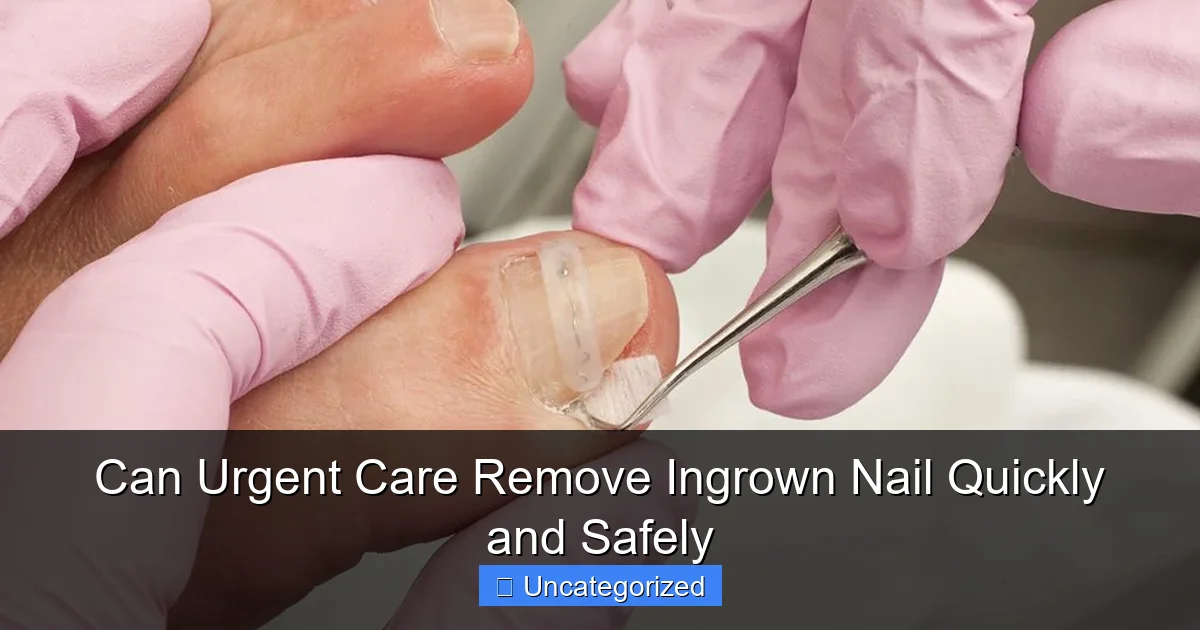
Featured image for can urgent care remove ingrown nail
Image source: joycelim.com
Yes, urgent care clinics can quickly and safely remove ingrown nails when performed by trained medical professionals using sterile techniques and local anesthesia. They offer a faster, more affordable alternative to ER visits for moderate to severe cases, with minimal pain and low infection risk when proper aftercare is followed.
Key Takeaways
- Urgent care clinics can safely remove ingrown nails with proper tools and expertise.
- Seek immediate care if severe pain, swelling, or infection signs appear.
- Local anesthesia ensures minimal discomfort during the quick removal procedure.
- Follow aftercare instructions like soaking and bandaging to prevent recurrence.
- Avoid DIY methods—improper cuts can worsen infection or cause complications.
- Recurrent cases may need a podiatrist for permanent surgical solutions.
📑 Table of Contents
- Can Urgent Care Remove Ingrown Nail Quickly and Safely
- Understanding Ingrown Nails: Causes, Symptoms, and When to Seek Help
- Why Choose Urgent Care for Ingrown Nail Removal?
- What to Expect During Ingrown Nail Removal at Urgent Care
- Aftercare and Recovery: Tips for a Smooth Healing Process
- Comparing Urgent Care to Other Treatment Options
- Conclusion: Fast, Safe, and Effective Relief Awaits
Can Urgent Care Remove Ingrown Nail Quickly and Safely
Imagine waking up to a sharp, throbbing pain in your toe, making every step a painful ordeal. You glance down and notice the edge of your toenail digging into the surrounding skin, red and swollen. You’re dealing with an ingrown nail—a common but often debilitating condition that affects millions of people each year. While mild cases can sometimes be managed at home, severe or recurring ingrown nails often require professional intervention. This is where urgent care centers come into play. But can urgent care remove ingrown nails quickly and safely? The answer is a resounding yes—and in many cases, it’s the ideal solution for fast, effective, and affordable treatment.
Urgent care centers are increasingly becoming the go-to option for non-life-threatening medical issues, including minor surgical procedures like ingrown toenail removal. Unlike emergency rooms, which are designed for critical trauma and life-threatening conditions, urgent care clinics are equipped to handle acute but non-emergent issues efficiently. With shorter wait times, lower costs, and access to qualified healthcare providers, urgent care offers a convenient and reliable pathway to relief. Whether your ingrown nail is causing severe pain, signs of infection, or you’ve tried home remedies without success, urgent care can provide timely intervention. This comprehensive guide explores everything you need to know about ingrown nail removal at urgent care, from diagnosis to recovery, and why it might be the best choice for your situation.
Understanding Ingrown Nails: Causes, Symptoms, and When to Seek Help
What Is an Ingrown Nail?
An ingrown nail (also known as onychocryptosis) occurs when the edge of a toenail—most commonly the big toe—grows into the surrounding skin, causing pain, redness, swelling, and sometimes infection. The condition typically affects the lateral edges of the toenail and can range from mild discomfort to severe pain that interferes with daily activities. While fingernails can also become ingrown, toenails are far more susceptible due to pressure from footwear, tight socks, and repetitive impact during walking or running.

Visual guide about can urgent care remove ingrown nail
Image source: ankleandfootcenters.com
Common Causes and Risk Factors
- Improper nail trimming: Cutting nails too short or rounding the corners instead of straight across increases the risk of the nail growing into the skin.
- Tight or ill-fitting footwear: Shoes that compress the toes, especially high heels or narrow-toed shoes, push the skin against the nail edge.
- Trauma or injury: Dropping something on your foot, stubbing your toe, or repetitive pressure from sports like soccer or ballet can alter nail growth patterns.
- Genetic predisposition: Some people have naturally curved or thick toenails that are more likely to become ingrown.
- Medical conditions: Obesity, diabetes, and poor circulation increase the risk and complicate healing.
- Excessive sweating: Moist environments can soften the skin, making it easier for the nail to penetrate.
Recognizing the Symptoms
Early detection is key to preventing complications. Watch for these signs:
- Redness and tenderness along one or both sides of the toenail
- Pain when pressure is applied (e.g., wearing shoes or touching the toe)
- Swelling and warmth around the nail
- Visible nail edge piercing the skin
- Drainage of pus or clear fluid (indicative of infection)
- Foul odor (a sign of bacterial or fungal infection)
When to Seek Professional Care
While mild cases may respond to home care (soaking, elevation, proper trimming), you should visit urgent care if:
- Pain is severe or worsening
- Signs of infection (pus, red streaks, fever) are present
- You have diabetes, peripheral neuropathy, or a compromised immune system
- You’ve attempted home treatment for more than 2–3 days with no improvement
- The ingrown nail has recurred multiple times
Example: Sarah, a 28-year-old nurse, developed a painful ingrown toenail after wearing tight work shoes during a double shift. After two days of soaking in Epsom salt and using over-the-counter pain relievers with no relief, she visited an urgent care center. The provider confirmed a moderate ingrown nail with early signs of infection and recommended immediate removal.
Why Choose Urgent Care for Ingrown Nail Removal?
Speed and Accessibility
One of the most compelling reasons to choose urgent care is speed. Most urgent care centers offer walk-in services with average wait times of 15–30 minutes—far shorter than the hours-long waits typical at emergency rooms. Appointments are often available the same day, and many clinics operate extended hours (including weekends), making it easier to fit treatment into a busy schedule.
Cost-Effectiveness
Urgent care is significantly more affordable than emergency departments. According to a 2022 study by the American Academy of Urgent Care Medicine, the average cost of an ingrown toenail removal at urgent care ranges from $100 to $250, compared to $500 to $1,500 in an ER. Even with insurance, urgent care typically results in lower copays and out-of-pocket expenses.
Qualified Medical Staff
Urgent care providers are trained in minor surgical procedures. Most clinics are staffed by physicians, nurse practitioners, or physician assistants with experience in dermatologic and podiatric interventions. They are equipped to:
- Diagnose the severity of the ingrown nail
- Administer local anesthesia safely
- Perform precise nail removal techniques
- Prescribe antibiotics if infection is present
- Provide aftercare instructions
Comprehensive On-Site Services
Unlike primary care offices, which may refer you to a podiatrist, urgent care centers often have the tools and expertise to handle the entire process in one visit. This includes:
- Digital imaging (X-rays) if a bone infection is suspected
- Point-of-care wound culture testing
- Immediate access to antiseptics, sutures, and dressings
- Prescription services (many have on-site pharmacies)
Lower Risk of Over-Treatment
Emergency rooms are designed for life-threatening conditions and may over-treat minor issues due to liability concerns. Urgent care providers focus on appropriate, evidence-based care. For example, they’re less likely to perform unnecessary imaging or prescribe broad-spectrum antibiotics unless absolutely necessary.
Real-World Example
James, a 45-year-old construction worker, developed a painful ingrown nail after a work boot rubbed against his toe for weeks. He visited an urgent care clinic after his primary care doctor’s office couldn’t see him for a week. Within 45 minutes, the provider numbed the area, removed the ingrown portion, and prescribed oral antibiotics. James returned to light duty the next day and avoided a costly ER visit.
What to Expect During Ingrown Nail Removal at Urgent Care
Initial Assessment and Diagnosis
Your visit begins with a thorough evaluation. The provider will:
- Ask about your symptoms, duration, and any prior attempts at treatment
- Inspect the toe for signs of infection, abscess, or cellulitis
- Check for underlying conditions (e.g., diabetes, poor circulation)
- Determine whether the ingrown portion is small, moderate, or severe
Tip: Bring a list of medications and any relevant medical history. This helps the provider assess risks (e.g., blood thinners, allergies) before proceeding.
Anesthesia and Preparation
To ensure comfort, the provider will administer a local anesthetic, typically a lidocaine injection near the base of the toe. This blocks pain signals and may cause a brief stinging sensation. The area is then cleaned with antiseptic (e.g., iodine or chlorhexidine) and draped to maintain sterility.
Procedure Types: Partial vs. Complete Removal
The treatment depends on severity:
- Partial nail avulsion: The most common approach. The ingrown edge is removed using sterile clippers or a nail elevator. This is sufficient for most cases.
- Matrixectomy (chemical or surgical): For recurrent ingrown nails, the provider may destroy the nail root (matrix) to prevent regrowth. This can be done chemically (using phenol or sodium hydroxide) or surgically (with a scalpel). Chemical matrixectomy has a 90%+ success rate and is preferred for its lower complication risk.
- Complete nail removal: Rarely needed, but used for severely deformed or infected nails.
Post-Procedure Care
After removal, the provider will:
- Apply an antibiotic ointment (e.g., bacitracin)
- Cover the toe with a sterile dressing
- Prescribe oral antibiotics (e.g., cephalexin) if infection is present
- Provide written aftercare instructions
What It Feels Like
Most patients report minimal pain during the procedure due to effective anesthesia. You may feel pressure or a tugging sensation as the nail is lifted, but no sharp pain. Post-procedure, the toe may throb for 1–2 hours as the anesthetic wears off. Over-the-counter pain relievers (e.g., ibuprofen) are usually sufficient.
Example Scenario
Maria, a 16-year-old dancer, visited urgent care with a recurrent ingrown nail. The provider performed a partial avulsion and recommended a chemical matrixectomy to prevent future issues. The entire process took 20 minutes, and Maria was able to walk out without assistance.
Aftercare and Recovery: Tips for a Smooth Healing Process
Immediate Post-Procedure Care (First 24–48 Hours)
- Keep the dressing clean and dry. Change it daily or if it becomes wet/dirty.
- Soak the foot. Use a warm Epsom salt solution (1/2 cup salt in a basin of water) for 10–15 minutes, 2–3 times daily. This reduces swelling and promotes drainage.
- Elevate the foot. Lie down with your foot above heart level to minimize swelling.
- Wear open-toed shoes. Sandals or flip-flops reduce pressure on the toe.
- Take prescribed antibiotics. Finish the entire course, even if symptoms improve.
Pain Management
- Use ibuprofen (Advil) or acetaminophen (Tylenol) as directed.
- Avoid aspirin, which can increase bleeding risk.
- Apply a cold pack (wrapped in cloth) for 15 minutes at a time to reduce swelling.
Signs of Complications to Watch For
Contact your provider or return to urgent care if you notice:
- Increasing redness, swelling, or pain after 2–3 days
- Pus or foul-smelling drainage
- Red streaks extending up the foot (sign of cellulitis)
- Fever or chills
- No improvement in symptoms after 1 week
Long-Term Prevention Strategies
- Trim nails straight across. Use clean, sharp clippers. Avoid rounding the corners.
- Wear proper footwear. Choose shoes with a wide toe box. Avoid high heels or tight socks.
- Maintain good foot hygiene. Wash feet daily and keep them dry, especially between toes.
- Inspect feet regularly. Especially important for people with diabetes or poor circulation.
- Consider professional pedicures. A licensed podiatrist can trim nails safely and monitor for early signs of ingrown nails.
Recovery Timeline
Most patients return to normal activities within 1–3 days. Full healing takes 2–6 weeks, depending on the procedure:
- Partial avulsion: 2–3 weeks
- Chemical matrixectomy: 4–6 weeks (due to slower tissue recovery)
Real-Life Tip
After her procedure, Maria (the dancer) wore a protective toe sleeve during practice and soaked her foot twice daily. She avoided pointe shoes for three weeks and returned to full performance with no recurrence.
Comparing Urgent Care to Other Treatment Options
Urgent Care vs. Emergency Room
| Factor | Urgent Care | Emergency Room |
|---|---|---|
| Average Cost | $100–$250 | $500–$1,500 |
| Wait Time | 15–30 minutes | 1–4 hours |
| Staff Expertise | Trained in minor procedures | General ER physicians |
| Follow-Up Care | Often provided on-site | Usually requires referral |
| Best For | Acute, non-critical cases | Severe trauma, systemic infection, or life-threatening conditions |
Urgent Care vs. Podiatrist
- Podiatrists: Ideal for chronic or complex cases (e.g., recurrent ingrown nails, fungal infections, biomechanical issues). They offer specialized tools and long-term management plans.
- Urgent Care: Perfect for immediate relief and one-time procedures. If the issue recurs, urgent care can refer you to a podiatrist.
Urgent Care vs. Primary Care Physician (PCP)
- PCPs: May not perform nail removals in-office. They often refer to specialists, leading to delays.
- Urgent Care: Handles the procedure immediately, saving time and avoiding multiple appointments.
When to Choose Each Option
- Urgent care: First-time ingrown nail, moderate pain, signs of infection, or inability to see a podiatrist quickly.
- Podiatrist: Recurrent ingrown nails, severe deformity, or underlying foot conditions (e.g., flat feet).
- ER: Systemic infection (fever, chills), diabetic foot ulcer, or trauma with bone involvement.
Conclusion: Fast, Safe, and Effective Relief Awaits
An ingrown nail can turn a simple walk into a painful ordeal, but it doesn’t have to derail your life. Urgent care centers offer a fast, safe, and cost-effective solution for ingrown nail removal, combining skilled providers, immediate treatment, and comprehensive aftercare. With procedures typically completed in under an hour and recovery timelines measured in days—not weeks—urgent care stands out as the optimal choice for most acute cases.
By choosing urgent care, you gain access to timely intervention that prevents complications like infection, abscess formation, or chronic pain. The providers are trained to perform both simple and advanced techniques (like chemical matrixectomy) with precision, ensuring minimal discomfort and maximal success. Moreover, the affordability and convenience of urgent care make it accessible to patients of all ages and backgrounds.
Remember: early action is key. If you’re experiencing pain, redness, or signs of infection, don’t wait. Visit an urgent care center today to get back on your feet—literally and figuratively. With proper aftercare and preventive strategies, you can enjoy pain-free toes and prevent future occurrences. Whether you’re a busy professional, an athlete, or someone managing a chronic condition, urgent care delivers the relief you need, when you need it.
Frequently Asked Questions
Can urgent care remove an ingrown nail the same day?
Yes, most urgent care centers can remove an ingrown nail the same day, especially if you’re experiencing pain, swelling, or signs of infection. They often have the tools and expertise to perform minor procedures quickly and safely.
Is it safe to get an ingrown nail removed at urgent care?
Absolutely. Urgent care clinics are equipped to handle minor surgical procedures like ingrown nail removal using sterile techniques and local anesthesia. Their staff are trained to minimize complications and ensure a safe recovery.
How much does it cost to remove an ingrown nail at urgent care?
The cost typically ranges from $100 to $300, depending on the severity and whether minor surgery is needed. This is often more affordable than an ER visit, and many urgent care centers accept insurance for ingrown nail removal.
What happens during an ingrown nail removal at urgent care?
The provider will numb the area with a local anesthetic, then gently remove the embedded portion of the nail. If needed, they may apply an antiseptic and dress the wound, and prescribe antibiotics if infection is present.
Can urgent care treat an infected ingrown nail?
Yes, urgent care can treat an infected ingrown nail by draining pus, removing the problematic nail section, and prescribing antibiotics. Early treatment at urgent care helps prevent the infection from worsening or spreading.
Should I go to urgent care or a podiatrist for ingrown nail removal?
Urgent care is a great option for sudden, painful ingrown nails, especially with signs of infection. However, for recurring cases or complex foot anatomy, a podiatrist may offer long-term solutions like partial nail removal or matrixectomy.