
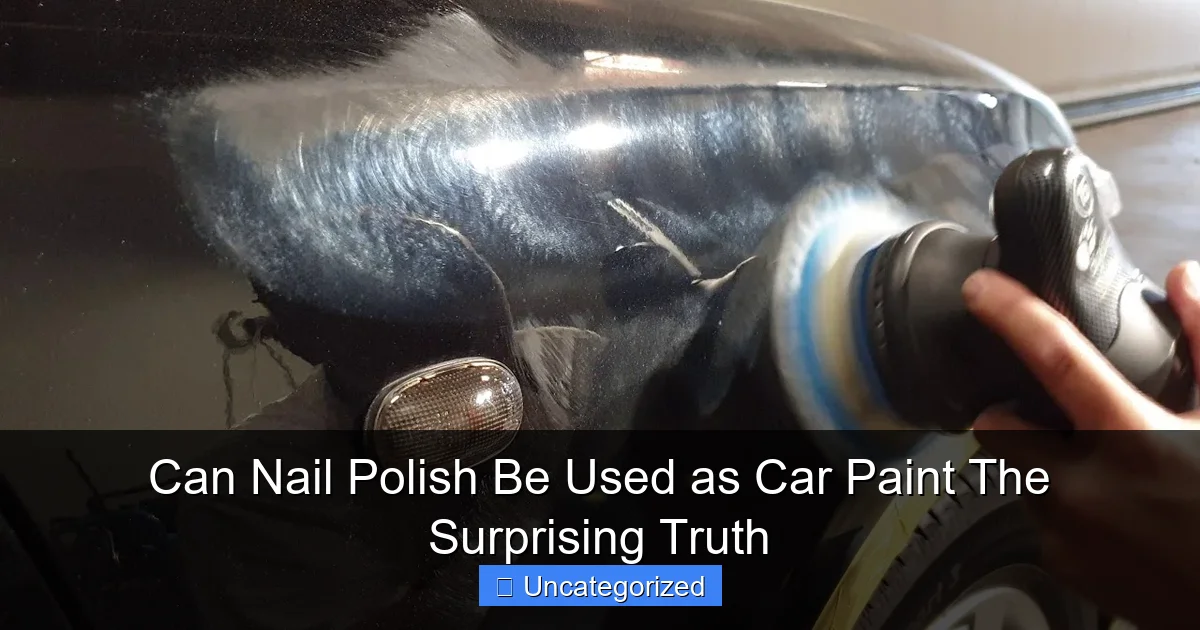
Featured image for can nail polish be used as car paint
Image source: i.ytimg.com
No, nail polish should not be used as car paint—while it may offer a temporary, glossy fix for small scratches, it lacks the durability, UV resistance, and adhesion required for automotive surfaces. Using nail polish on a car can lead to peeling, discoloration, and long-term damage, especially when exposed to weather, sunlight, and road debris. Save your manicure supplies for your nails, not your vehicle.
Key Takeaways
- Nail polish is not durable for car surfaces and will chip quickly.
- UV resistance is lacking, causing rapid fading under sunlight exposure.
- Adhesion issues arise due to incompatible chemical compositions with automotive paint.
- Use only for minor touch-ups, not full-body paint jobs.
- Remove immediately if applied to avoid long-term paint damage.
- Opt for professional products designed specifically for automotive finishes.
📑 Table of Contents
- Introduction: The Unusual Question That Sparks Curiosity
- The Chemistry of Nail Polish vs. Car Paint
- Can Nail Polish Actually Work on Minor Scratches?
- Why Nail Polish Fails as a Long-Term Car Paint Solution
- Safer and More Effective Alternatives to Nail Polish
- Data Table: Nail Polish vs. Automotive Paint – Performance Comparison
- Conclusion: The Verdict on Nail Polish as Car Paint
Introduction: The Unusual Question That Sparks Curiosity
Imagine this: you’re standing in your garage, staring at a small scratch on your car’s fender. It’s not deep enough to warrant a trip to the body shop, but it’s noticeable enough to bug you every time you walk past your vehicle. You glance at your bathroom cabinet, where a collection of colorful nail polishes sits—some barely used, others long forgotten. Suddenly, a wild idea pops into your head: can nail polish be used as car paint? It’s a question that seems absurd at first glance, but surprisingly, it’s one that many car owners and DIY enthusiasts have asked—especially those looking for quick, low-cost fixes.
The allure of using nail polish is obvious. It’s readily available, inexpensive, comes in hundreds of colors, and dries quickly. For minor blemishes, especially on dark-colored cars, a dab of black or dark blue polish might seem like a perfect match. But before you reach for that bottle of Midnight Sapphire, it’s essential to understand the fundamental differences between nail polish and automotive paint. While the idea may sound clever, the reality involves chemistry, durability, and long-term consequences. In this comprehensive guide, we’ll explore whether nail polish can truly substitute for car paint, the science behind both products, real-world applications, and safer, more effective alternatives. Whether you’re a budget-conscious driver or a creative tinkerer, this article will reveal the surprising truth behind this unconventional repair method.
The Chemistry of Nail Polish vs. Car Paint
Understanding Nail Polish Formulation
Nail polish, also known as nail varnish, is a lacquer designed specifically for application on human nails. Its primary components include film-forming agents (like nitrocellulose), solvents (such as ethyl acetate and butyl acetate), resins (for adhesion and gloss), plasticizers (to prevent brittleness), and pigments for color. These ingredients are optimized for quick drying, smooth application, and temporary wear—typically lasting a week or two before chipping.
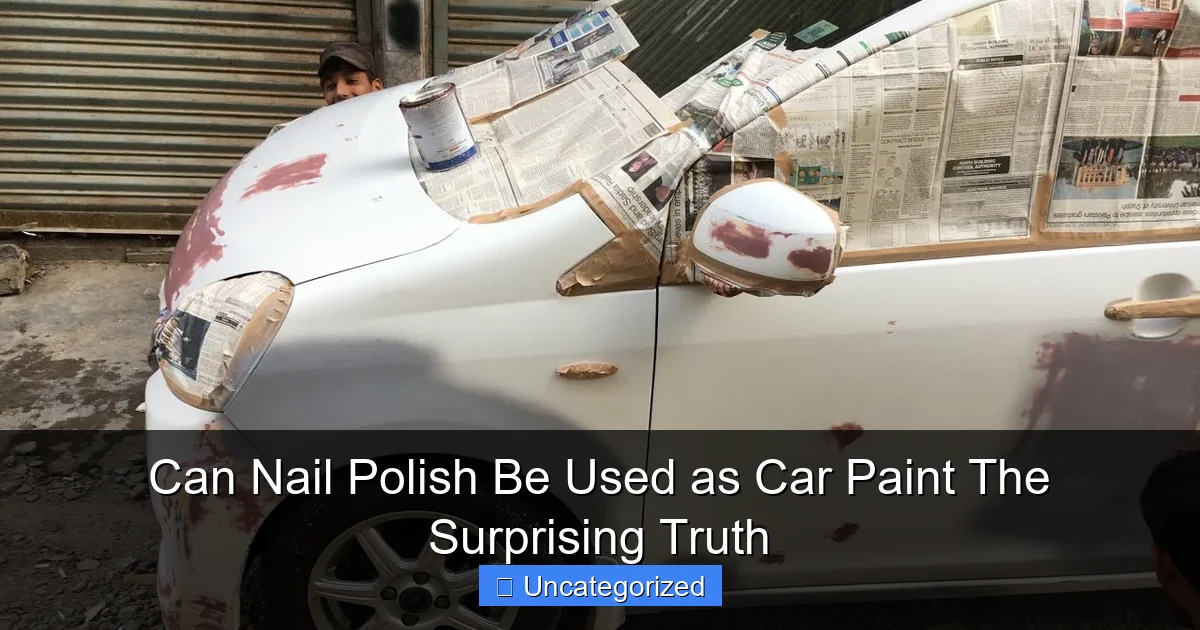
Visual guide about can nail polish be used as car paint
Image source: i.ytimg.com
Because nail polish is meant to adhere to a flexible, non-porous surface (fingernails), its chemical structure isn’t built to withstand outdoor elements. It lacks UV stabilizers, weatherproofing agents, and the robust cross-linking polymers found in automotive finishes. When exposed to sunlight, moisture, temperature fluctuations, and road debris, nail polish quickly degrades. This makes it fundamentally unsuitable for long-term use on vehicles.
Automotive Paint: Engineered for Durability
Car paint, on the other hand, is a multi-layered system designed to endure extreme conditions. A typical automotive finish includes:
- Primer: A base coat that ensures adhesion to the metal and protects against corrosion.
- Basecoat: The colored layer, often made from acrylic or urethane resins, containing UV-resistant pigments.
- Clearcoat: A transparent top layer that shields the basecoat from UV rays, scratches, and environmental damage. It’s typically a two-part polyurethane that chemically cures for maximum hardness.
Automotive paints are engineered to last 5–10 years or more, resisting fading, chipping, and chemical exposure. They undergo rigorous testing for adhesion, gloss retention, and resistance to salt, acid rain, and thermal expansion. The curing process often involves heat or chemical catalysts, resulting in a finish that’s far more resilient than any nail polish.
Key Differences at a Glance
While both products contain pigments and solvents, their purposes and performance standards couldn’t be more different. Nail polish is a cosmetic product meant for temporary use on a small, protected area of the body. Car paint is a protective, structural component of a vehicle exposed to the elements 24/7. Using nail polish on a car is like using a band-aid on a deep wound—it might cover the issue temporarily, but it won’t provide real protection.
Can Nail Polish Actually Work on Minor Scratches?
When Nail Polish Might “Seem” to Work
Despite its limitations, nail polish can appear to work on very minor surface scratches—especially those that only affect the clearcoat and don’t penetrate to the metal. For example, if your car has a light scuff from a shopping cart or a shallow scratch from a tree branch, a dab of matching nail polish might fill in the damaged area and blend with the surrounding paint.
This effect is most noticeable on dark-colored cars, where the contrast between the scratch and the base color is less pronounced. A black car with a hairline scratch might benefit from a black nail polish application because the polish fills the groove and reflects light similarly to the undamaged paint. The result? A scratch that’s no longer visible to the naked eye.
However, this is a visual fix, not a structural one. The nail polish doesn’t bond chemically with the car’s paint layers. Instead, it sits on top, forming a weak, temporary patch. It’s akin to painting over a crack in a wall with a different kind of paint—it hides the flaw but doesn’t fix the underlying issue.
Real-World Example: The DIY Touch-Up Test
Let’s consider a real-world scenario. A Reddit user named Sarah shared her experience on r/DIY: she used a $2 bottle of dark blue nail polish to cover a scratch on her 2018 Honda Civic. Initially, the repair looked great—the scratch was gone, and the polish dried in under 10 minutes. But after two weeks of driving, including one rainy day and a trip through a car wash, the nail polish had begun to lift at the edges. After a month, it had completely flaked off, and the scratch was back, now slightly worse due to moisture getting trapped underneath.
This case highlights a critical point: nail polish lacks adhesion and durability. While it may pass the “eye test” initially, it fails under real-world stress. The solvents in nail polish can also soften the existing clearcoat, making the area more vulnerable to further damage. In some cases, the polish can even react with the car’s paint, causing clouding or discoloration.
Practical Tips for Temporary Use (With Caveats)
If you’re in a pinch and need a temporary fix, here are some tips—though we strongly advise against long-term reliance:
- Clean the area thoroughly with isopropyl alcohol before application to remove wax, grease, and debris.
- Use a fine brush or dotting tool to apply the polish precisely, avoiding overspray or smudging.
- Apply in thin layers and allow each to dry completely (5–10 minutes) to prevent bubbling.
- Choose a polish with a glossy finish to better match the car’s clearcoat.
- Seal with a clear nail polish topcoat for slightly better protection (still not durable).
Remember: this is a stopgap, not a solution. Monitor the area daily and plan for a proper repair as soon as possible.
Why Nail Polish Fails as a Long-Term Car Paint Solution
UV Degradation and Fading
One of the biggest reasons nail polish fails on cars is UV exposure. Automotive paints are formulated with UV absorbers and stabilizers that prevent fading and chalking. Nail polish lacks these additives. Within days of sun exposure, the pigments begin to break down, leading to discoloration. A red or blue polish might fade to a washed-out pink or gray, creating an unsightly patch that’s more noticeable than the original scratch.
Studies show that unprotected organic dyes (like those in many nail polishes) degrade 5–10 times faster under UV light than automotive-grade pigments. This means your “repair” could become a bigger eyesore in a matter of weeks.
Moisture and Corrosion Risk
Even a small scratch can expose bare metal to moisture. When nail polish is applied over such a scratch, it forms a weak barrier that can trap water underneath. Unlike automotive paint, which bonds tightly and seals the metal, nail polish is porous and prone to micro-cracks. Over time, trapped moisture leads to oxidation and rust, especially in humid climates or winter road salt environments.
For example, a scratch on the hood or door edge—areas exposed to rain and snow—can develop rust within a few months if not properly sealed. Nail polish accelerates this process by creating a false sense of security while allowing moisture ingress.
Thermal Expansion and Adhesion Issues
Car surfaces expand and contract with temperature changes—sometimes by several millimeters over a 24-hour cycle. Automotive paints are engineered to flex with the metal. Nail polish, however, becomes brittle when cold and soft when hot. This mismatch in thermal expansion causes the polish to crack, peel, or lift at the edges.
Additionally, nail polish doesn’t chemically bond to automotive paint. It adheres mechanically, which means it’s easily dislodged by friction, car washes, or even wiping with a microfiber cloth. A single trip through an automated car wash can strip away nail polish repairs, leaving a patchy, uneven finish.
Chemical Incompatibility
Many nail polishes contain solvents that can dissolve or soften the car’s clearcoat. This is especially true for polishes with high concentrations of acetone or ethyl acetate. When applied to a vehicle, these solvents can cause the clearcoat to become cloudy, sticky, or even peel off. This not only ruins the repair but also damages the original paint job, making future touch-ups more difficult and expensive.
Safer and More Effective Alternatives to Nail Polish
Automotive Touch-Up Paint Kits
The best alternative to nail polish is a professional automotive touch-up paint kit. These kits are available from car manufacturers, auto parts stores, and online retailers. They typically include:
- Color-matched basecoat (in a pen or bottle)
- Clearcoat pen
- Micro-applicators and sanding tools
- Instructions for proper application
Brands like Dr. ColorChip, Langka, and OEM touch-up kits offer precise color matching using your car’s VIN or paint code. While slightly more expensive than nail polish (ranging from $10–$30), they provide a durable, long-lasting repair that blends seamlessly with the original paint.
Paint Pens and Brush-On Formulas
For small scratches, paint pens are a popular choice. They allow for precise application and often include a built-in clearcoat layer. Brush-on formulas are better for larger areas, as they provide a smoother finish. Both types are formulated with UV-resistant pigments and adhesion promoters, ensuring they bond properly to the car’s surface.
Pro tip: Always apply touch-up paint in a shaded area, and follow the “less is more” principle. Overfilling the scratch creates a raised bump that’s more noticeable than the original damage. Sanding with 2000-grit sandpaper and polishing after curing (7–14 days) can help level the repair.
Clearcoat Repair Sprays and Scratch Removers
For scratches that don’t penetrate the basecoat, consider clearcoat repair sprays or scratch removal compounds. Products like Meguiar’s ScratchX or 3M Clearcoat Scratch Repair can fill shallow scratches and restore gloss without repainting. These are ideal for light swirls, scuffs, and marring.
For deeper scratches, a two-step process works best: first, apply a basecoat touch-up paint, then seal with a clearcoat spray. This mimics the factory paint structure and provides maximum protection.
Professional Help for Major Damage
If the scratch exposes bare metal, is deep, or covers a large area, it’s best to consult a professional. Body shops use advanced techniques like blending, color sanding, and clearcoat reapplication to achieve invisible repairs. While more expensive (typically $100–$500), professional work ensures the repair is durable, corrosion-free, and visually flawless.
Data Table: Nail Polish vs. Automotive Paint – Performance Comparison
| Feature | Nail Polish | Automotive Paint |
|---|---|---|
| Primary Use | Cosmetics (human nails) | Vehicle protection and aesthetics |
| UV Resistance | Low (fades in days) | High (resists fading for years) |
| Water Resistance | Poor (porous, traps moisture) | Excellent (seals metal from corrosion) |
| Adhesion | Mechanical (weak, lifts easily) | Chemical (strong, durable bond) |
| Thermal Flexibility | Low (brittle in cold, soft in heat) | High (flexes with metal) |
| Chemical Compatibility | Risk of dissolving clearcoat | Engineered to resist solvents |
| Lifespan on Car | 1–4 weeks (if lucky) | 5–10+ years |
| Cost (per oz) | $0.50–$2 | $10–$30 (touch-up kits) |
Conclusion: The Verdict on Nail Polish as Car Paint
So, can nail polish be used as car paint? The short answer is: technically, yes—but only as a temporary, cosmetic fix for the most minor of scratches. It’s not a substitute for proper automotive paint, and relying on it for long-term repairs can lead to bigger problems, including rust, fading, and paint damage. While the idea is creative and the initial results may seem promising, the science and real-world testing overwhelmingly show that nail polish fails under the demands of daily driving.
The key takeaway is this: prioritize durability and protection. Your car’s paint isn’t just about looks—it’s a critical barrier against corrosion, UV rays, and environmental damage. Using nail polish undermines that protection and can cost you more in the long run. Instead, invest in proper touch-up kits, learn the right techniques, and seek professional help when needed.
That said, if you’re in a remote location, facing a tiny scratch, and need a quick cover-up until you can access proper supplies, a dab of nail polish might buy you a few days of peace. Just don’t expect it to last. Think of it like a temporary tattoo—it looks fun at first, but it won’t stand the test of time. For lasting results, stick to the tools designed for the job. Your car—and your wallet—will thank you.
Frequently Asked Questions
Can nail polish be used as car paint for small repairs?
Nail polish can temporarily cover minor scratches or chips on car paint due to its similar solvent-based formula, but it’s not a durable solution. It lacks UV protection and weather resistance, so it’s best for short-term cosmetic fixes.
Is nail polish a safe alternative to car paint for touch-ups?
While nail polish adheres to metal, it’s not formulated for automotive use and may crack, peel, or fade quickly. For long-lasting results, use manufacturer-recommended car paint touch-up products instead.
Can you use nail polish as car paint for full-body jobs?
No, nail polish is far too thin and lacks the durability, gloss, and protective layers needed for full car paint jobs. Automotive paint is designed to withstand extreme conditions, unlike nail polish.
What are the risks of using nail polish on car paint?
Nail polish can react poorly with existing car paint, causing discoloration or damage to the clear coat. Its solvents may also soften or lift the original finish over time.
Does nail polish match car paint colors accurately?
Even if a nail polish shade looks similar, it rarely matches factory car paint due to differences in pigments and metallic flakes. Always test in an inconspicuous area first.
Can nail polish be used as car paint for DIY enthusiasts?
While creative, using nail polish as car paint is not recommended for serious projects. It’s a quick fix for tiny blemishes, but proper automotive paint ensures longevity and a professional finish.